By: Piper Hutchinson, LSU Manship School News Service
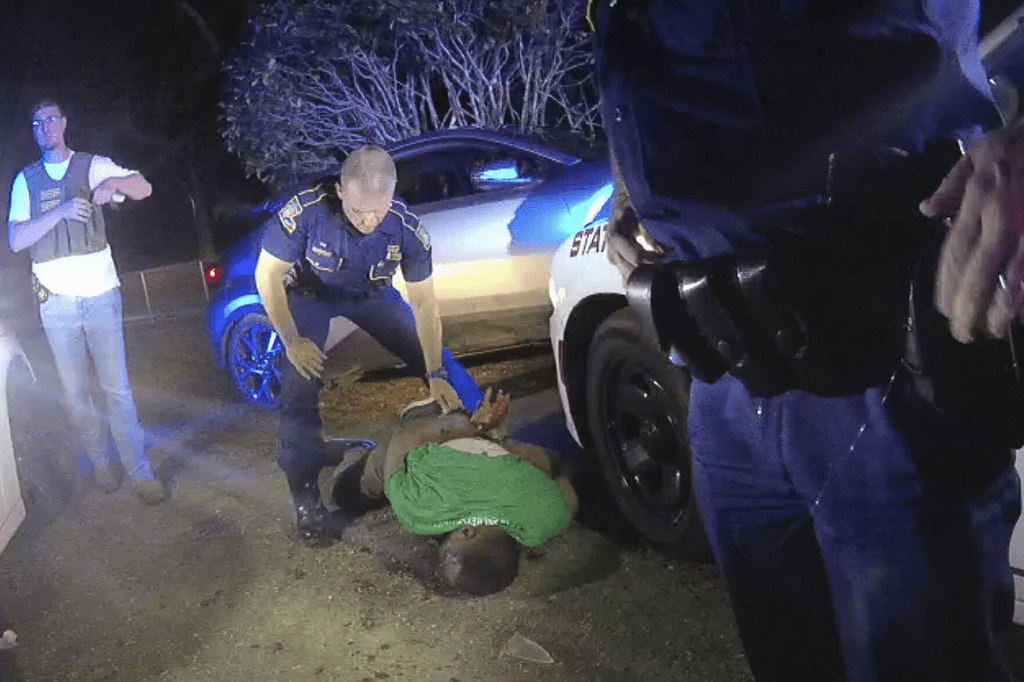
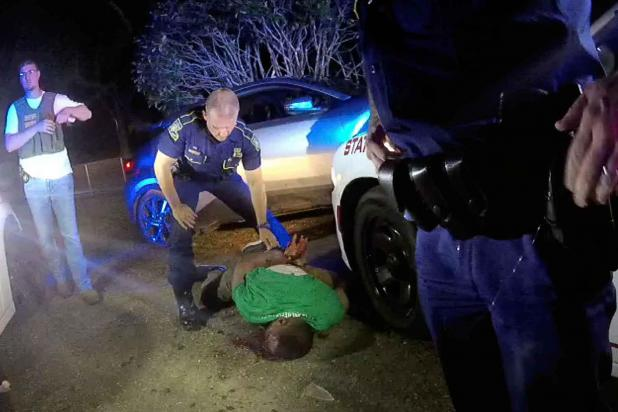
Louisiana State Police Bodycam video via the Associated Press
BATON ROUGE–Third District Attorney John Belton told a House committee Thursday that he will convene a grand jury to consider charges against the state troopers involved in the death of Ronald Greene.
Greene, a black motorist, died after a violent encounter with State Police in which he was beaten, tased and dragged while shackled after a high-speed chase that ended in a crash outside Monroe.
“It was the worst thing I’ve ever seen,” Belton told the special committee investigating the Greene case. “I believe state and federal crimes were committed, including federal civil rights violations.”
Belton said he is moving forward with charges because he has been giving approval to do so by federal authorities, who had previously asked him to wait until their investigation was complete.
By: Piper Hutchinson, LSU Manship School News Service
BATON ROUGE–The Senate Education Committee advanced a bill Thursday that would prohibit transgender athletes from competing in accordance with their gender identity.
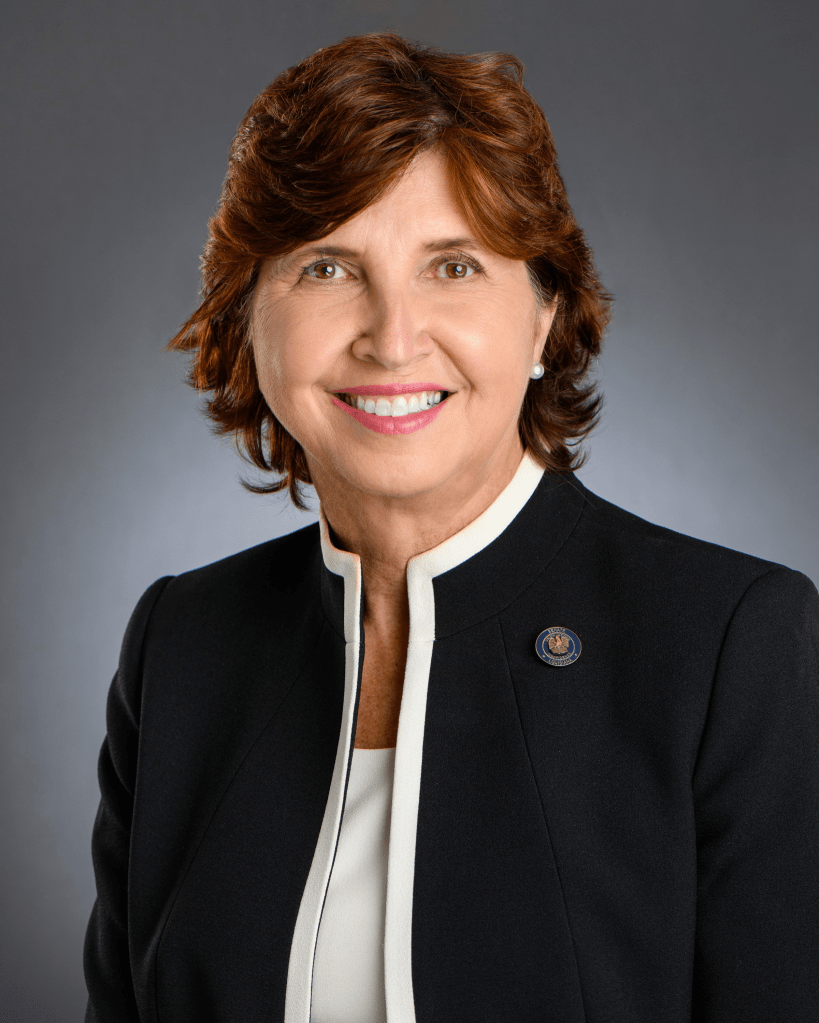
Senate Bill 44, sponsored by Sen. Beth Mizell, R-Franklinton, is dubbed the “Fairness in Women’s Sports Act.” The bill requires athletes from the elementary through collegiate level to compete based on their sex at birth.
The bill unanimously cleared the committee, with neither of the two Democrats on the committee, Sen. Cleo Fields of Baton Rouge, or Sen. Katrina Jackson, of Monroe objecting.
The bill is redundant at the high school level, as the Louisiana High School Athletic Association already requires athletes to compete based on their birth sex, leading critics to call the bill a solution in search of a problem. When the bill came up last year, the LHSAA said that it was aware of only one transgender athlete who had tried to compete in Louisiana.
But if the bill becomes law, it could shake up college athletics. NCAA policy allows transgender athletes to compete under certain circumstances.
By: Allison Kadlubar, LSU Manship School News Service
Rep. Mike Huval, R- Breaux Bridge, proposed a bill to create fines for drivers holding a phone even if they are not texting. Allison Kadlubar\ LSU Manship School News Service
BATON ROUGE—Lawmakers tangled Monday over whether to create a new set of fines for holding a phone while driving even if the driver is not texting.
The “hand-held phone ban” bill would allow law enforcement to fine drivers seen with a phone in hand while behind the wheel.
“This is trying to promote safe driving,” the author of the bill, Rep. Mike Huval, R-Breaux Bridge, said.
The fine would be lower than the $175 to $500 for a texting-and-driving citation. The new fine would range from $50 to $100 and may include a maximum of 15 hours of community service for a first offense.
The House postponed a vote on the bill as lawmakers questioned how it would be enforced and whether it would discriminate against poorer people with the most basic phones.
BATON ROUGE, La. (LSU Manship School News Service) – The House voted 75-21 Monday night to advance a bill to grant adopted people access to their original birth certificates with their birth parents’ names.
Rep. Charles Owen, R-Rosepine, sponsored the bill, which would grant the right to adoptees age 24 or older to learn the identity of their birth parents. He chose that age because of Louisiana’s forced inheritance laws. After 24, a child is not entitled to inheritance.
Currently, the only way for an adopted person to access their original birth certificate is to appear in front of a judge with compelling reasons. Compelling reasons can be topics such as health and inheritance. This is not possible without hiring a lawyer, which Owen believes is not possible for all Louisiana citizens.
“Grown people should have access to their documents,” said Owen.
Questions arose about whether the bill would violate the privacy of birth parents. When children are adopted, they receive new birth certificates with the names of their adoptive parents. But, Owen argued that the bill is about letting a person access a vital government record with his or her name on it rather than initiating meetings with parents.
By: Lura Stabiler and Rosel Flores, LSU Manship School News Service
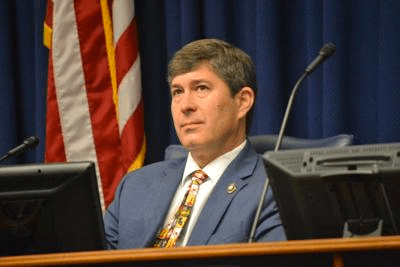
Photo cutline: Sen. Kirk Talbot, R-River Ridge sponsored bills to crack down on carjackings and the theft of catalytic converters. Photo credit: Elizabeth Garner/ LSU Manship School News Service
BATON ROUGE—The Louisiana Senate advanced two bills Monday to crack down on carjackings and thefts of auto emissions systems.
The bills were sponsored by Sen. Kirk Talbot, R-River Ridge. One would make the theft of catalytic converters a crime with a sliding scale of prison terms depending on the value of the parts that were stolen.
The other would increase the penalty for carjacking committed with a firearm to 11 to 20 years in prison from 2 to 20 years now.
The bills were among several advanced Monday that deal with crime and violent behavior. They still need to be considered by the House.
The House Committee on Administration of Criminal Justice advanced a bill Thursday that would allow parents who are convicted of killing their minor children to receive the death penalty. (Canva image)
The House Committee on Administration of Criminal Justice advanced a bill Thursday that would allow parents who are convicted of killing their minor children to receive the death penalty.
House Bill 68, authored by Rep. Barbara Carpenter, D-Baton Rouge, would add minor children of the offender to the list of victims of the crime of first-degree murder.
In her opening remarks, Carpenter brought up recent cases of Louisiana parents who had killed their children and told the committee that members of her community had asked her to address the issue.
“Parents of babies have literally killed these babies, and something needs to be said or done,” Carpenter said. “Right here in Baton Rouge, the death of a 2-year-old kid. The mom got upset because the child was playing with her eyeglasses, and she hit the baby, and the baby died. The boyfriend and the mama put the baby in a suitcase, drove it to Mississippi and buried it.”
Current law includes all minors under the age of 12 on the list of victims for whom killers can receive the death penalty.
The Boyd children, three of whom are seen here, left. in a childhood snapshot taken in Ferriday, La., lived in a volatile household. Their father, Earcel Boyd, pictured right with wife Marjorie, would preach in Black churches and paradoxically engage in a violent Klan offshoot called the Silver Dollar Group. Photos courtesy of Leland Boyd
Third in a three-part series
Leland and Sonny Boyd say some relatives and old friends wonder why they are speaking publicly about their father’s involvement in the Ku Klux Klan in 1960s Louisiana.
But to them, talking about growing up in an abusive and violently segregated atmosphere is necessary in today’s social landscape.
“If you don’t study your history, if you don’t learn your history, then you’re doomed to relive it,” Sonny, 74, said. “There are now two generations of people who didn’t have to live through that. And so they don’t really have an understanding of it, and how some people hold the old views the way they do and how some people came out of it seemingly unscathed. We didn’t come out unscathed. We bear the scars of what happened.”
Leland, 70, said their father, Earcel Boyd, “was a pretty good man to start off with. But something changed over the years.”
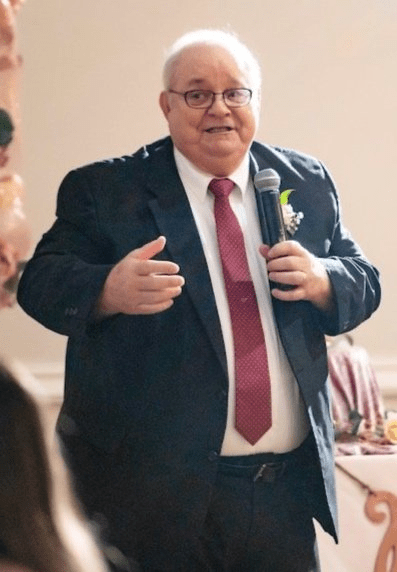
Leland Boyd said people need to choose what path they will follow regardless of their upbringing.Courtesy of Leland Boyd
“I don’t have to be what my daddy was.” Leland said. “We chose not to choose that path. And that’s an option. It’s a choice you make. Every person has to make that choice. We, as individuals, have to make that choice.”
The brothers recall how their father lived a life of paradoxes. He had Black friends around Ferriday, Louisiana, where the family lived in the 1960s, and once taught his children to treat everyone with respect, no matter their skin color. An ordained Baptist minister, Earcel preached in Black churches, too.
But he also joined the Ku Klux Klan in 1962 and later became a member of a secretive and violent Klan offshoot called the Silver Dollar Group.
Earcel was never charged with a crime, and many of the racially motivated bombings and murders in and around Ferriday remain unsolved. But FBI files indicate members of the Silver Dollar Group were the main suspects.
When Leland Boyd woke up in the middle of the night as a child, he’d sometimes find his father Earcel in the bathroom, scrubbing his hands over and over.
“The next day you’d see him, his hands would be just red,” Leland said. “He would take a bar of soap and just scrub his arms for hours under hot water. He would be in the bathroom at least three times a month early in the morning for hours.”
Earcel’s sons believed this compulsion was a result of nightmarish experiences during World War II, when Earcel participated in landing assaults on the Japanese in Guam.
During one raid, another son Sonny said, Earcel spotted a Japanese guard whose position put U.S. troop movements at risk. That night, Earcel silently crawled up a ditch, grabbed the guard from the back and slit his throat with a knife. He then had to lie in the ditch overnight with the guard’s blood encrusting his hands and arms.
“He never felt that he could get his hands washed clean,” Sonny said.
That happened when Earcel was 21, and later in the war, he shot an American soldier who attempted to reboard a landing craft after debarking on an assault. Earcel was trained to allow no one to reboard unless wounded or dead and shot the soldier, who recovered, Sonny said.
The Boyd brothers believe that their father’s rage and irrationality — which caused great emotional and physical distress for their family — was partly related to his experiences in World War II, especially the killing of the guard.
His propensity for violence also was apparent in his decision to join the Ku Klux Klan in 1962 when he was living in Concordia Parish, just across the Mississippi River from Natchez. And in the mid-1960s, he was one of the 20 or so members of the Silver Dollar Group, a violent Klan offshoot thought to be involved in several murders.
By: Piper Hutchinson, LSU Manship School News Service
Ronald Greene, a 49-year-old Black man from Monroe, died in 2019 after a car crash and being beaten by State Police troopers. Louisiana State Police Bodycam video via the Associated Press.
BATON ROUGE–The mother of Ronald Greene gave tearful testimony Tuesday to a House committee investigating the circumstances of his death, calling her son’s killing and the handling of the state police investigation a “black eye for the state of Louisiana.”
Mona Hardin broke down sobbing at the witness table as she called out the state police for the death of her son, who died after being tased and beaten while in custody.
“There was a reason why my son was killed: Because state troopers are judge, jury, and executioner,” Hardin said.
Hardin echoed lawmakers in criticizing Col. Kevin Reeves, the retired superintendent who oversaw the state police at the time of Greene’s death, for giving insufficient answers to the committee.
By: Piper Hutchinson, LSU Manship School News Service
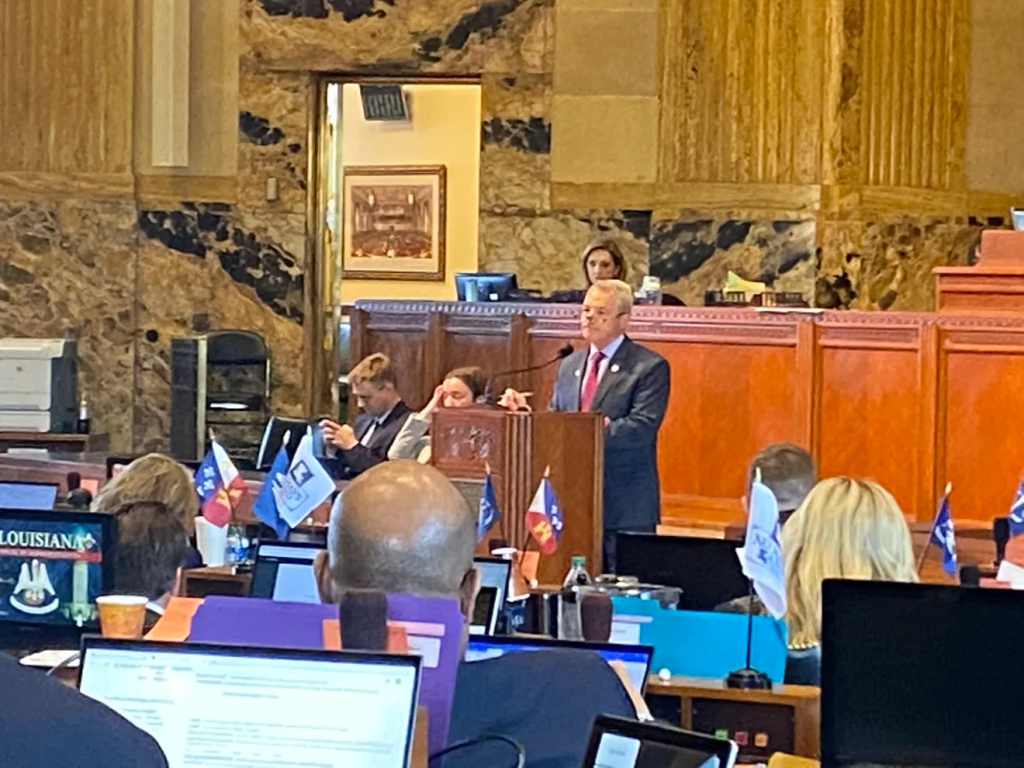
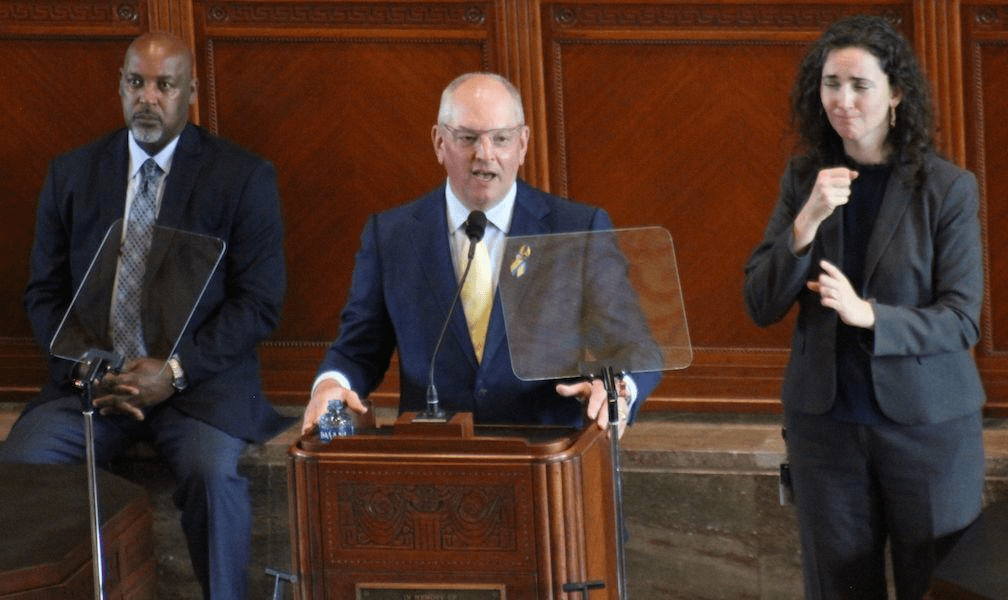
Gov. John Bel Edwards lays out his legislative priorities on Monday in an address to the Legislature. Alex Tirado / LSU Manship School News Service
BATON ROUGE — Just over two years after the first COVID death in Louisiana, Gov. John Bel Edwards announced Monday that the public health emergency will expire on Wednesday, crediting the availability of vaccines, antivirals and quality masks.
“Just because the proclamation is expiring doesn’t mean COVID is over,’’ he said. “If the circumstances call for it, I will not hesitate to declare another emergency.”
“But, God willing, we will never have to see such difficult mitigation measures in our state again,” he added.
In his annual state-of-the-state address to the Legislature, Edwards said Louisiana also is in a better fiscal situation, and he laid out his proposals to spend several billions of dollars of federal aid money and surplus state tax revenues.
“At my first state of the state, I had just inherited a billion-dollar budget deficit to close out that fiscal year and a $2 billion deficit for the year that started July 1, 2016,” Edwards said. “Today, as I stand here before you, we have hundreds of millions in surplus, even more in current year excess, and billions in federal funding.”



 LSU Manship School Statehouse Bureau