Bill allowing parents to request cameras in special education classrooms heads to State Senate

Dr. Mary Elizabeth Christian and Sen. Franklin Foil testified for his bill that would allow cameras in special education classrooms (Photo courtesy of Emily Wood/LSU Manship School News Service)

Published: May 7, 2021

By: Emily Wood | LSU Manship School News Service

BATON ROUGE–A bill to allow cameras in special education classrooms if parents or legal guardians request them is headed to the Senate floor.

Sen. Franklin Foil, R-Baton Rouge, the author of Senate Bill 86, said he brought the bill forward on behalf of the Louisiana Developmental Disabilities Council and concerned parents.

The bill, which was approved by the Senate Education Committee Thursday, would require public and charter schools to create policies for the implementation of video and audio in special education classrooms.

The cameras would not be allowed near restrooms or anywhere where a child might be unclothed.

Dr. Mary Elizabeth Christian, a physician in Baton Rouge and the mother of a 21-year-old with autism, epilepsy and neuromuscular disorder, recounted her daughter’s experience with a school in East Baton Rouge Parish.

“I will never forget the day when we were in an individualized education planning meeting for my daughter, and the principal proudly told us that Grace was making social progress because they were not having to strap her down nearly as often as they had in the past,” said Christian.

Christian went on to advocate for the bill, stating that it will protect students who cannot speak for themselves, who are vulnerable, and who reside in classrooms that are isolated without windows.

Read more at brproud.com

Louisiana House committee advances bill prohibiting employers from discriminating against natural hairstyles

Reps. Dodie Horton and Valarie Hodges question Sen. Troy Carter about his bill to ban discrimination against natural hairstyles (Photo courtesy of Ryan Nelsen/LSU Manship School News Service)

Published: May 7, 2021

By: Ryan Nelsen | LSU Manship School News Service

BATON ROUGE — A bill banning employers from discriminating against natural hairstyles advanced through a House committee Thursday, even though four Republicans objected to it.

The bill, written by state Sen. Troy Carter, a Democrat from New Orleans who was recently elected to the U.S. Congress, adds natural hair to the traits Louisiana companies cannot discriminate against when hiring. The House Labor Committee approved the bill in a 7-4 vote.

“The issue of natural hair and descendants who are of African American descent particularly, who opt to wear their hair natural, non-permed and without chemicals should be able to do that,” said Carter.

The bill had passed 8-0 in a Senate committee and continued its success in the full Senate, passing 31-0.

Carter said the bill does not interfere with employers having requirements for hair length or facial hair, citing that firefighters need shorter hair and that some jobs prohibit facial hair on men.

“If there are rules that are in place that govern all hair, it just can’t distinguish or discriminate against someone because of the texture,” said Carter.

Another worry from critics on the panel was that business owners would be confused on what is a natural hairstyle. The committee used examples of audience and panel members to demonstrate what the bill was describing.

The four Republicans who voted against the bill were Reps. Beryl Amedée of Houma, Valarie Hodges of Denham Springs, Raymond Crews of Bossier City and Larry Frieman of Abita Springs.

Every Democrat in the committee voted favorably as well as three Republican representatives–Michael Echols of Monroe, Dodie Horton of Haughton and Charles Owen of Rosepine.

Rep. Tammy Phelps, D-Shreveport, presented the bill alongside Carter and will continue as co-author as Carter transitions to the U.S. House. Phelps aided Carter in explaining that the bill was to protect hairstyles including natural, braids, locks and twists.

Read more at brproud.com

‘It was a terrible experience’: After surviving COVID-19, Louisiana man urges Black community to get vaccinated

Published: May 5, 2021

By: Matthew Bennett | LSU Manship School News Service

“It’s the flu to the 12th power,” remarked Ivory Payne, a Baton Rouge publisher who is urging Black Louisianans to get COVID-19 vaccines.

“I couldn’t breathe,” Payne said, describing his own experience with the virus in early February. “I think the shortness of breath was the worst thing. It was a terrible experience.”

After his doctors told him to go home and quarantine for 14 days, Payne, 60, found that his fight against the respiratory illness had just begun. He said that after a difficult two weeks in isolation, his condition only got worse.

Payne described a litany of troubling COVID-19 symptoms, including not being able to smell or taste, body aches that prevented him from lifting everyday items and nausea. He spent three distressed weeks in the hospital, where he was forced to consider his chances of survival.

Payne is doing better now, but still has some fatigue as he cautiously returns to work as publisher of the BR Weekly Press, a newspaper for the Black community. His takeaway from his experience is the importance of vaccinations.

He wishes he had been eligible for a vaccine before he was hit by the virus, and he wants to urge Black residents to trust in the safety of COVID-19 vaccines.

“I believe the African-American community has been hit the hardest, because of poor health care,” Payne said. “And just lack of education about the vaccine and the illness itself.”

Larry Green (R) receives his second dose of the Moderna COVID-19 vaccine from registered nurse Teresa Frey at Lincoln Memorial Congregational Church UCC on March 12, 2021 in Los Angeles, California. The Providence health organization pop-up vaccine clinic was held at the predominantly Black church as part of their health equity campaign in communities of color. The current COVID-19 death rate for Black people is 10 percent higher than the state average while the death rate for Latinx people is 21 percent higher.
Larry Green (R) receives his second dose of the Moderna COVID-19 vaccine from registered nurse Teresa Frey at Lincoln Memorial Congregational Church UCC on March, 12, 2021 in Los Angeles, California. The Providence health Organization pop-up vaccine clinic was held at the predominantly Black church as part of their health equity campaign in communities of color. The current COVID_19 death rate for Black people is 10 percent higher than the state average while the death rate for Latinx people is 21 percent higher. Mario Tama, Getty Images

‘Everyone has to be speaking the same message’

As of April 26, Blacks accounted for 28% of COVID-19 vaccinations in Louisiana, while making up 32% of the population, according to the Kaiser Family Foundation. Whites accounted for 61% of vaccinations, while representing 62% of the population.

Notably, Black residents make up an alarming 39% of deaths due to COVID-19 in the state.

Read more at Leesville Daily Leader

Fantasy sports betting on track for 2021 football season

Published: May 4, 2021

By: Ryan Nelsen | LSU Manship School News Service

FanDuel logo

FanDuel, the giant wagering platform, confirmed it is on track to provide fantasy sports gambling in Louisiana by the beginning of this year’s football season.

Stacie Stern, governmental affairs director at FanDuel, said in an interview that FanDuel is working with Louisiana Gaming Board and the state police to launch its product.

Two companies have applied to provide fantasy sports contests, according to Maj. Chuck McNeal of the Louisiana State Police Gaming Enforcement Division, who says both entities will be operational soon. 

“It will definitely happen before the fall,” said McNeal, “as long as my investigators are getting all the documentation and paperwork they need.”

In 2018, voters in 47 parishes approved daily fantasy games in which users create a fictional roster of players and tally their statistics against other players’ teams for prize money. The games can be played on mobile phones or computers. The state will tax the operators’ net gambling revenue at 8%. 

Louisiana was one of only seven states that did not allow fantasy sports betting in 2020. People in the 17 parishes that did not vote in favor will not be able to compete within parish lines.

“Getting the law changed was a really big step for us,” said Stern. “It’s definitely a big sport-fan state, so we’re excited to launch our product.”

Read more at The West Side Journal

Proposal to provide $10M in aid to Louisiana loggers moves forward in legislature

Published: May 4, 2021

By: Sydney McGovern | LSU Manship School News Service

capital.jpg
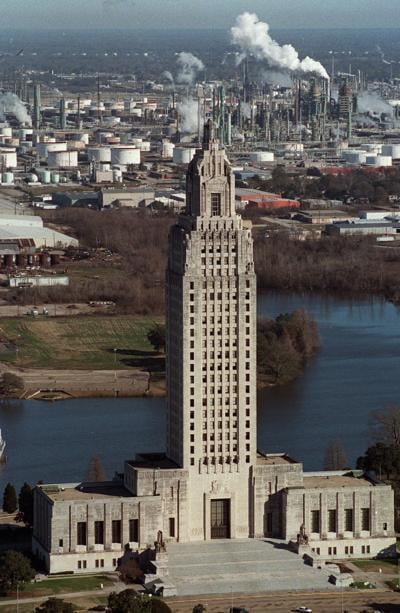
STAFF PHOTO BY G. ANDREW BOYD The Louisiana state capital building in Baton Rouge, LA, with the Exxon chemical refinery in the background, in this 1992 file photo. ORG XMIT: NOLA2016012911291110 ORG XMIT: NOLA1704071906228255G. ANDREW BOYD

Legislation to provide relief dollars to the logging industry in Louisiana is headed to the House floor.

House Bill 642 would create the Louisiana Loggers Relief Program to issue a total of $10 million in grants for timber harvesting and timber-hauling businesses.

House Speaker Clay Schexnayder, R-Gonzales, sponsored the measure along with co-sponsors Senate President Page Cortez, R-Lafayette, and House Appropriations Committee Chair Jerome Zeringue, R-Houma.

The House Committee on Appropriations unanimously approved the bill on Monday and could be heard on the House floor later this week.

“These businesses hadn’t been included in any of the federal agriculture relief programs that other farmers and agriculture producers had been able to utilize,” Zeringue said.

The program would be administered by the state treasurer using resources from the Louisiana Main Street Recovery Program. Funding comes from Congress’ American Rescue Plan Act of 2021, which provided $5.18 billion in aid to Louisiana for a variety of purposes.

Buck Vandersteen, executive director of the Louisiana Forestry Association, applauded the legislators for realizing the role that loggers play in supplying essential products to the state and country.

“It’s a good way to recognize people that often go unseen but are extremely vital,” Vandersteen said. “The governor called them essential workers, and they worked through all of COVID-19. They kept things going, and they made sure that the mills had the fiber that they needed to produce paper products and building materials.”

In December, Congress included $200 million in funding for logging businesses that suffered a loss in revenues due to the pandemic.

But Congress never specified the rules for obtaining the funds, and with the change in presidential administrations, the money was further delayed. While other agricultural industries were granted relief, logging businesses never saw federal money.

Read more at The Advocate

House committee approves extending early voting from 7 to 10 days during presidential elections

Published: May 5, 2021

By: Sydney McGovern, LSU Manship School News Service

(AP Photo/Jeff Roberson)

BATON ROUGE, La. – A bill to extend early voting from seven to 10 days during presidential elections was approved unanimously by a House committee Wednesday.

Rep. Frederick Jones, D-Monroe, offered his bill after the record voter turnout in the 2020 presidential election. Louisiana saw over 2.1 million people vote in November, and 986,000 of them voted early in-person.

The bill originally extended early voting for every election, but after financial concerns from the registrars of voters, Jones limited the bill to presidential elections. The extension of early voting comes with a price tag of $400,000 to the state, including pay for poll workers.

Secretary of State Kyle Ardoin noted that while early voting provides a great convenience to voters, extending this period for every election would come with challenges for his office and the registrars.

Limiting the bill to presidential elections also allows for more time to adjust election timelines.

“By making it a specific election and only for that election, it doesn’t give us the heartburn that any further expansion would,” Ardoin said. “For any consideration of future expansion, we will need more time between elections, and we will have to pull back the calendar earlier in the year.”

John Couvillon, founder of JMC Analytics and Polling, spoke in favor of the bill, saying that since early voting was introduced in Louisiana in the aftermath of Hurricane Katrina, it has succeeded fantastically.

“Before early voting was introduced, you basically had 97% of the electorate voting on election day, so you were shoehorning nearly 2 million voters into one day’s worth of voting,” Couvillon said.

“Given the fact that we expanded early voting, the proverbial, ‘If you build it, they will come’ certainly happened last year,” he added.

The first presidential election in which early voting was used in Louisiana was in 2008 with 15% of Louisianans participating. That number significantly increased in each presidential election since, to 18% of all voters in 2012 and 26% in 2016.

Early in-person voting expanded to 14 days in the November election because of the temporary emergency voting plan under the COVID-19 pandemic, and a record 46% of Louisianans chose to vote early.

That early-voting period has since returned to the normal seven days, but with a permanent extension of early voting, legislators hope to maintain a high turnout.

Read more at KALB

Bill that would restrict law enforcement from using no-knock warrants, chokeholds advances

Published: April 27, 2021

By: Ryan Nelson, LSU Manship School News Service

BATON ROUGE, La. – A bill that would restrict law enforcement officials from using no-knock warrants and chokeholds advanced Tuesday.

Sen. Cleo Fields, D-Baton Rouge, moved his bill, SB34, through the Senate Judiciary B Committee, and it will next go to the Senate floor. The bill restricts law enforcement officers from conducting no-knock warrants at night and from using chokeholds, and it calls for more cameras to increase accountability.

Sen. Gregory Tarver, D-Shreveport said, however, that he would debate the restriction on a no-knock warrant on the Senate floor as “most bad things happen at night.”

“I think we need to have a very serious discussion about this,” Talbot said. “When a judge assigns it, they ought to be able to do this thing at night or day. As long as it’s legal and they follow the rules and regs.”

Rebekah Taylor, program manager at the Louisiana Commission on Law Enforcement and Administration of Criminal Justice, sat with Fields as he introduced his bill and said it gave the courts clarity on how these warrants are being served.

“The officers are not announcing themselves as they entering a residence based on a warrant that’s been signed by a judge,” said Talbot. “This legislation would prohibit those types of warrants from being executed, except when probable cause has been shown.”

Lt. Robert Burns of the Louisiana State Police said the practice of serving no-knock warrants has “greatly diminished” over the years.

“We do a lot more of what’s called a surround-and-call-out where we protect all entrances and exits of a property, and we use as many tactics as we can to try to gain communication with occupants of the property,” said Burns.

Read more at KALB

Louisiana bill to ban transgender girls from playing on female sports teams clears committee

Published: April 30, 2021

By: Ryan Nelsen, LSU Manship School News Service

BATON ROUGE — A bill that would ban transgender girls from playing on a female sports team passed without a single objection in the Senate Education Committee Thursday.

A recent influx of similar bills has appeared around the country and have received the label “anti-trans” by activists. The bill, written by Sen. Beth Mizell, R-Franklinton, will head to the Senate for a vote. Mizell said this bill “protects female athletes.”

Gov. John Bel Edwards has said he opposes the bill and will seek to veto it along with other bills that impose restrictions on transgender people.

Melissa Flournoy, a former Louisiana legislator, testified in opposition to the bill, calling it “unnecessary” and warning that the NCAA has said it will not host championship games in states that pass laws that discriminate against transgender athletes.

More:Why the gender-affirming care debate for minors in Louisiana is a concern for the rest of the Gulf South

“I hope you understand the national business climate and how these anti-transgender bills affect our ability to keep the Sugar Bowl,” said Flournoy. She pointed out that New Orleans is scheduled to host the NCAA Final Four in 2022.

A bill by Sen. Beth Mizell would ban transgender girls from playing on female sports teams.
A bill by Sen. Beth Mizell would ban transgender girls from playing on sports teams. Photo courtesy of Sen. Beth Mizell

Eddie Bonine, the executive director of Louisiana High School Athletic Association, said there has not been an occurrence of a transgender student wanting to play sports. He supported the bill as he sees it solidifying LHSAA’s current policy.

Dylan Waguespack of True Colors Unite, a youth homeless outreach program that focuses on the LGBTQ community, said LHSAA policies have already eliminated the chance for transgender students to play sports.

The LHSAA policy states that a transgender student can play sports if the surgical and anatomical changes have been completed.

“A minor would never receive those procedures,” said Waguespack.

No law in Louisiana prohibits gender reassignment surgery for minors, but guidelines posted by the Endocrine Society state that the operation should not take place until the individual is 18.

Read more at The Advertiser

LSU faculty senate votes to require Covid-19 vaccination

Published: April 23, 2021

By: Kathleen Peppo, LSU Manship School News Service

BATON ROUGE, La (LSU Manship School News Service) –A resolution calling on LSU to add the COVID-19 vaccine to its list of mandatory immunizations for students returning to campus this fall passed the LSU Faculty Senate 52-1 Thursday.

Inessa Bazayev, one of the professors who proposed the resolution, said 140 LSU faculty members had signed on to it out of concern about the potential health risks for them and their students.

Bazayev, an associate professor of music theory, said the resolution “prioritizes students’ safety by requiring students to be fully vaccinated for COVID-19 prior to the start to fall 2021, given that LSU was planning on a return to face-to-face instruction in the fall, including for large classes.”

Professor Roger Laine, a biological sciences professor, voiced his wholehearted support, saying he was “unwilling to get into a room where my 35 students are not vaccinated.”

Political Science Professor Daniel Tirone said that LSU is scheduling classes at 100% of classroom capacity.

“So it is obvious that the intention is that they’re going to have every seat filled to the extent that they can, but it is not clear that they’re going to maintain the current mitigation measures,” he said. “And so that, I think, only enforces the need for the vaccine requirement.”

The nearly unanimous vote came after LSU’s interim president, Tom Galligan, and University of Louisiana System President Dr. Jim Henderson announced this week that they did not plan to require the more than 125,000 students at their schools to get the vaccine before returning for in-person classes in the fall.

More than 70 universities across the country have said they will require the vaccine, a point continually brought up by LSU professors at Thursday’s meeting. A recent survey indicated that about a third of Louisiana residents do not plan to take the vaccine, raising fears among the professors that a similar percentage of students might return from summer vacation without it.

“I think it’s really important that all the students be vaccinated, and these other major universities have already done this, so I 100 percent support this,” said Laine.

“More institutions join this reasonable and responsible movement every day,” Bazayev said.

The University of California and the California State University systems were among the latest to announce vaccination plans. They said Thursday that they intend to require vaccines for the 1 million students and employees of their 33 campuses once the federal Food and Drug Administration formally approves the vaccines.

Galligan and Henderson have said their campuses cannot require students to be vaccinated because the FDA has only approved the COVID vaccine for emergency use and has not completed its full safety investigations. But other universities have said that the health risks and the possibility of additional COVID-19 variants warrant vaccine requirements.

Read more at The Advertiser

Louisiana absentee vote counting, teens can accompany voters bills

Published: April 23, 2021

By: Sydney McGovern, LSU Manship School News Service

BATON ROUGE — A House committee advanced a bill Thursday to extend the time to prepare and verify absentee ballots prior to election day.

It also advanced a bill that may soon allow teenagers to accompany parents in the voting booth.

Both bills were written by Rep. Lance Harris, R-Alexandria. The bill involving teens would permit children up to 15 years old to enter voting machines. Present law allows parents to bring only a pre-teen child into the booth.

Harris’ other bill would allow parishes, with permission from the secretary of state, to process mail-in and early voting ballots starting three days before election day.

“The changes would provide more time and attention to the verification process and ensure, as we’ve seen in some of these past elections, that the results would be reported timely, hopefully on election night,” Harris said.

Current state law permits parishes to conduct the verification process for absentee ballots the day before an election. The absentee ballots are not counted until election day, but Harris hopes that by preparing the ballots sooner, parishes can certify election results more quickly.

This bill comes in the wake of the November presidential election in which news organizations did not project the winner for three days as some states still counted their absentee ballots.

Secretary of State Kyle Ardoin said the bill would not change the final date to accept absentee ballots. They still must be received by 4:30 p.m. the day before an election.

Read more at The Advertiser