Bill to conceal names of companies providing death penalty drugs struck down

b68206e4-3b46-4a09-8c82-ee47d7e53bd6-28LETHAL_A
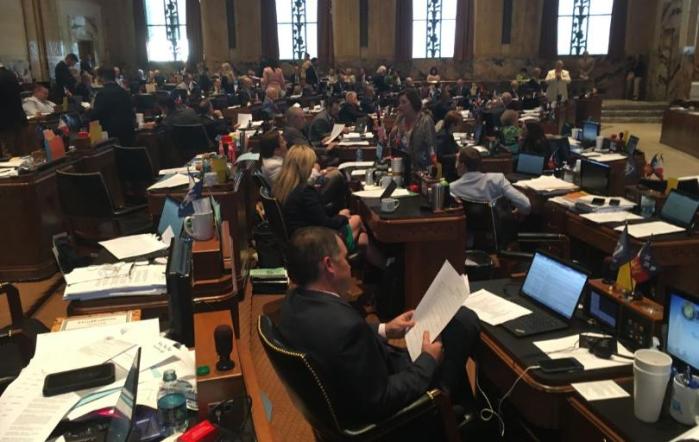
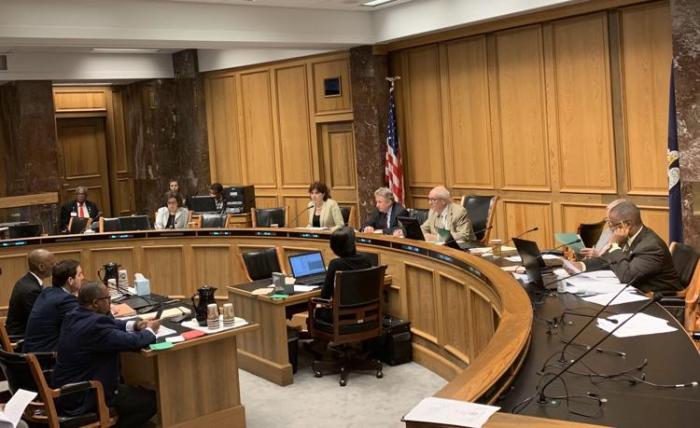
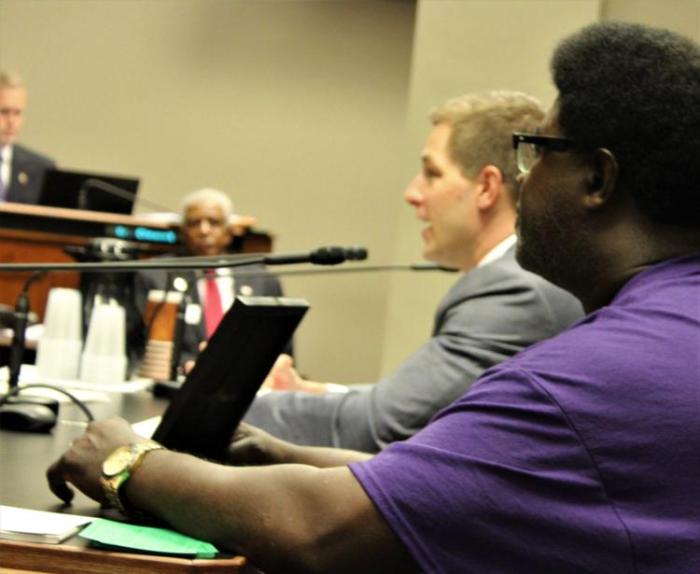
A Senate Judiciary Committee struck down a bill that would have concealed the names of companies that manufacture and provide drugs used in carrying out the death penalty. (Photo credit: Elisabeth Fondren/LSU Manship School News Service)

Published: May 29, 2019

By: Tryfon Boukouvidis and Lauren Heffker, LSU Manship School News Service

BATON ROUGE — A Senate Committee struck down a bill on a 3-2 vote along partisan lines that would have concealed the names of companies that manufacture and provide drugs used in carrying out the death penalty.

The sponsor of the bill, Rep. Nicholas Muscarello, R-Hammond, said this proposed law would have ensured that the identity of the drug manufacturer remained secret.

The bill would have guaranteed absolute confidentiality to lethal drug providers in Louisiana executions. The Louisiana State Penitentiary at Angola is the only facility in the state where the death sentence can be carried out.

Since 2000, seven people on death row in Louisiana have been exonerated, and two people have been executed. There have been no executions in the state since 2010.

In the committee, at the heart of the one-hour long debate were questions about government transparency versus information discretion.

The bill previously passed the House floor in a 68-31 vote earlier this month.

Michelle Ghetti, deputy solicitor general with the Louisiana Attorney General’s office, spoke in favor of the proposal. Ghetti said that by masking the provider’s identity, the bill could help prevent safety threats against execution drug providers and pharmacies, referring to cases in Oklahoma and Texas.

Sen. J.P. Morrell, D-New Orleans, who spoke in opposition of the bill, contended that Ghetti was using isolated cases to make a broader argument. “I do appreciate when you come to the committee and drop some of the most inflammatory language possible for maximum effect,” Morrell remarked.

Read more in The Shreveport Times.
Louisiana House advances bill that would set 16 as minimum age to marry in the state

5ced9a3e593b2.image
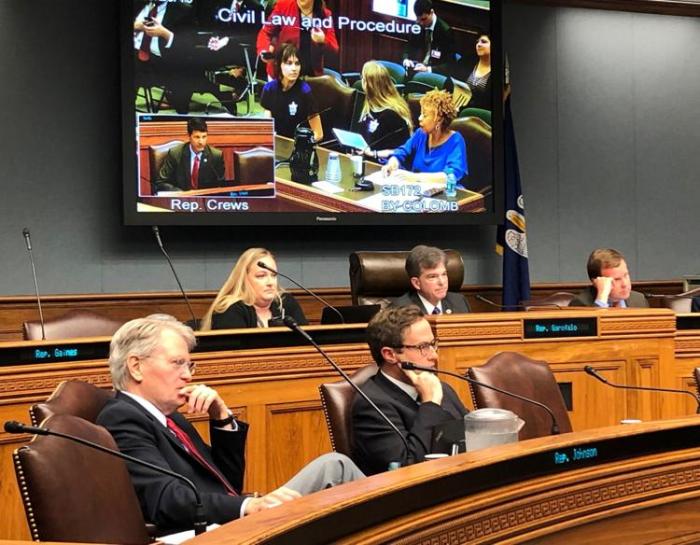
Lawmakers in the House Civil Law and Procedure Committee debated a proposal to set 16 as Louisiana’s minimum age for marriage on Tuesday, May 28. (Photo credit: Lauren Heffker/LSU Manship School News Service)

Published: May 28, 2019

By: Lauren Heffker and Tryfon Boukouvidis, LSU Manship School News Service

A Louisiana House committee advanced a bill on Tuesday that would set 16 as the minimum age for marriage in the state.

Louisiana currently does not have a legal minimum age for marriage. Minors need parental consent to get married, and if they are under 16 they need parental consent and the authorization from a juvenile court judge.

Under the proposed law, sponsored by Sen. Yvonne Colomb, D-Baton Rouge, minors 16 and 17 seeking to get married would have to obtain the permission of a parent and a judge.

Some committee members did not agree that 16 was old enough and contended that 18 would be the appropriate age.

Rep. Tanner Magee, R-Houma, and Rep. Mike Johnson, R-Pineville, advocated for raising the age to 18.

Referring to a bill that was struck down last week, Magee asked why lawmakers had supported a proposal that would have raised the minimum smoking age to 21, but not a child marriage ban.

Louisiana House lawmakers last Thursday voted down a proposal for a higher smoking age. The bill would have raised the smoking age from 18 to 21 for tobacco, alternative nicotine or vaping products.

“We want to trust [minors] to make the most important decision of their entire lives when their brains aren’t even fully formed yet,” Magee said in the House Committee on Civil Law and Procedure. “I think it’s very shortsighted of us. The more lightly we take it, the less serious people [will] take it,” he added.

Read more in The Gambit.

House passes bill to phase out the extra portion of the state sales tax

Capital+Talking+TAx
House members voted on Thursday in support of a proposal by Rep. lance Harris, R-Alexandria, to phase out the extra sales tax until 2023. (Photo credit: Hunter Lovell, LSU Manship School News Service)

By: Tryfon Boukouvidis, LSU Manship School News Service

Published: May 23, 2019

BATON ROUGE–The Louisiana House on Thursday voted 73-21 to pass a bill that would phase out the extra portion of the state sales tax that the Legislature renewed last year after five months of partisan tensions to address recurring budget crises.

The proposal would reduce the extra 0.45 of a cent of sales tax by one-tenth of a penny every year from 2020 to 2022 and repeal the rest in 2023.

Last year lawmakers struck a compromise under which the sales tax extension would expire in 2025. This would give lawmakers time to find more permanent solutions to the state’s fiscal shortfalls.

“If you are fine with extracting excessive money out of the taxpayer’s pockets,” said the sponsor of the bill, Rep. Lance Harris, R-Alexandria, “then you don’t have to vote for this bill.”

Under Harris’ proposal, the state is projected to lose $392 million in revenues by 2024.

The highest ranking Democrat in the House, Rep. Walt Leger of New Orleans, who supports Gov. John Bel Edwards’ position to maintain the sales tax, added an amendment during the debate that would take 0.05 percent of the 0.45 percent sales tax, or $42.5 million a year, to fund early childhood education.

“This is where we need to be investing and this gives us an opportunity to do it,” Leger said.

Read more in KALB.

Push to raise Louisiana smoking age to 21 fails again despite claims it could save state billions

58e4132a7aef8.image
(Photo credit: Brad Bowie, Advocate Staff Photo)

By: Hunter Lovell, LSU Manship School News Service

Published: May 23, 2019

BATON ROUGE–Louisiana House lawmakers struck down a proposal Thursday to raise the state’s legal smoking age from 18 to 21 for most people. The bill was only backed by 24 legislators while 55 voted against it.

The bill, sponsored by state Rep. Frank Hoffmann, R-West Monroe, would have banned anyone under 21 from purchasing tobacco, alternative nicotine or vaping products.

Lawmakers already had their reservations about the bill when it advanced through the House Appropriations Committee earlier this month. In an effort to accommodate legislators’ concerns, the proposed bill would have exempted first responders, military members and veterans.

Still, the bill fell short of the support needed to pass in the lower chamber.

A higher smoking age, Hoffmann stressed, would result on health benefits and health care savings. He also cited reports from the Campaign for Tobacco-Free Kids that showed 7,200 Louisianians die from smoking each year and that the state pays $1.8 billion in annual health care costs.

“Folks, this is a health issue,” said Hoffmann, a former smoker, in his closing remarks. “It’s a simple but tremendously important concept. It’ll reduce deaths, make better health, save money in the long run and make life better for many.”

Read more in The Advocate.

Senate committee advanced bills addressing sexual assaults in public colleges and universities

5ce71543beb4d.image
The Senate Education Committee advanced bills Thursday, May 23, 2019, related to suicide prevention, students linked to violent threats and collegiate sexual assault surveys. (Photo credit: Sheridan Wall, LSU Manship School News Service)

By: Sheridan Wall & Lauren Heffker, LSU Manship School News Service

Published: May 23, 2019

The Louisiana Senate Education Committee advanced bills Thursday that would address concerns about sexual assaults in public colleges and universities, add new measures to school suicide prevention programs, and report students linked to violent threats.

House Bill 294 sponsored by Rep. Barbara Carpenter, D-Baton Rouge, would improve current standards for administering anonymous sexual assault surveys at Louisiana’s public colleges and universities. Under Carpenter’s proposal, postsecondary institutions would issue the survey every three years in order to garner more respondents.

This would give administrators more time to prepare the survey, reach out to students for responses and analyze the results.

“When the state responses are in the single digits, that’s not telling us a lot about our communities,” said Jennie Stewart, who is the Title IX campus coordinator at Louisiana State University. “It’s not really statistically reliable and valid.”

“We want it to be a meaningful exercise in making our community a better place,” Stewart said, recognizing the need to improve the current survey.

Read more in The Advocate.

Lawmaker: Gun law should be consistent around the state

By: Tryfon Boukouvidis, LSU Manship School News Service

Published: May 22, 2019

BATON ROUGE — The Louisiana House on Tuesday passed proposals that would expand the state’s reach over local regulation of gun control and boost existing “stand your ground” laws, indicating a momentum of gun legislation in the state.

The House voted 68-30 to support a bill by Rep. Blake Miguez, R-Erath, which would eliminate the authority of local governments to prohibit the possession of firearms in certain businesses and public buildings.

On the House floor, Miguez contended that the current law is “a patchwork of regulations (that) confuse those trying to follow the law.” Gun law should be consistent around the state, he added.

Rep. Joe Marino, I-Gretna, expressed the position of the Louisiana Municipal Association, an organization that advocates for community development, that municipalities should retain their authority to designate firearm-free zones.

Several members of the Black Legislative Caucus also opposed the bill.

Rep. Terry Landry, D-New Iberia, said local governments know what is best for their residents.

“We cannot continue trumping local government rights,” Landry added.

In his rebuttal, Miguez highlighted the importance of Second Amendment rights.

“A good guy with a gun always stops a bad guy with a gun,” Miguez said.

Read more in The Advertiser.

Bill would allow patients to inhale cannabis for medicinal purposes

5ce5cdfbd642b.image
Rep. Ted James, D-Baton Rouge, proposed bills looking to update the state’s cannabis legislation this session. (Photo credit: Sarah Gamard, LSU Manship School News Service)

By: James Smith & Lauren Heffker, LSU Manship School News Service

Published: May 22, 2019

BATON ROUGE–A state Senate committee advanced a bill Wednesday that would allow patients to inhale cannabis for medicinal purposes and would no longer require that prescribing physicians live in the state.

The proposal, sponsored by Rep. Ted James, D-Baton Rouge, is among several bills looking to update the state’s cannabis laws this session.

The inhalation bill would loosen the laws under which physicians could recommend the use of medical marijuana for patients diagnosed with debilitating medical conditions.

Present law permits patients to consume medical marijuana through edibles, oils and extracts. The proposed bill would allow patients to inhale cannabis through inhaler-like devices. Prescribing doctors would also no longer have to reside in Louisiana, although they would still need to be licensed by the state.

Read more in The Advocate.

Legislators support efforts to help veterans start businesses, get hired

Veteran
Gov. John Bel Edwards spoke in support of the Veterans First Business Initiative at a press event for Central Louisiana business development at the State Capitol on May 22, 2019. (Photo credit: Madeline Meyer, LSU Manship School News Service)

By: Madeline Meyer, LSU Manship School News Service

Published: May 22, 2019

BATON ROUGE–Legislators are supporting efforts to help veterans start businesses and get hired in Louisiana. The Senate Commerce Committee on Wednesday advanced a proposal for the Veterans First Business Initiative.

The popular bill would be the first of its kind in the country.

The proposal, authored by Rep. Franklin Foil, R-Baton Rouge, was co-sponsored by 71 other legislators. The House voted unanimously in late April to advance the bill.

Foil’s proposal now moves to the Senate floor.

Under the initiative, the Louisiana Economic Development — the state’s business development agency — would create a registry for veteran-owned businesses. These businesses would also be able to post a sign or marker to indicate that they are veteran-owned.

To qualify as veteran-owned, veterans must own 51% or more of the business and must not have been dishonorably discharged.

“If you are a returning veteran and you’re looking for employment,” Foil said, “you can find other veteran-owned businesses that are owned by people who have gone through similar experiences.”

Read more in KATC News.

Several bills being supported to regulate abortions in Louisiana

Abortion+Supportesrs
Pro-choice protesters rallied outside of the State Capitol in Baton Rouge on Tuesday as legislators advanced several abortion bills. (Photo credit: Hunter Lovell, LSU Manship School News Service)

By: Lauren Heffker & Hunter Lovell, LSU Manship School News Service

Published: May 21, 2019

BATON ROUGE–Abortion continues to top the legislative agenda this week as Louisiana lawmakers in the House Health and Welfare Committee supported several bills on Tuesday that would further regulate abortions in the state.

Two key proposals would require abortion providers to give their patients detailed background information before performing an abortion and permit abortion facilities to report suspected human trafficking crimes to law enforcement.

Both bills were sponsored by Sen. Beth Mizell, R-Franklinton, and now move to the House floor for final passage.

One of the bills would change the existing Women’s Right to Know law, which means that women must give informed consent prior to having an abortion.

Mizell’s proposed legislation would expand the existing law. Abortion providers would have to supply written information about their background, including qualifications, past conduct and the location of the physician’s residency.

In Louisiana, patients can research their doctor’s qualifications, but information about the identities of physicians who perform abortions is not disclosed online.

Read more in KALB.

Senate panels advance bills to curb domestic violence

5ce53a7ae1061.image
In an effort to tighten laws protecting domestic abuse victims, Rep. John Stefanski, R-Crowley, left, discusses legislation named after Tracy Andrus’, right, daughter who was murdered by her husband. (Photo credit: Madeline Meyer, LSU Manship School News Service)

By: Madeline Meyer, LSU Manship School News Service

Published: May 21, 2019

BATON ROUGE–Louisiana legislators advanced bills in Senate judiciary committees Tuesday that would curb domestic violence, take steps to prevent sexual abuse of youth athletes, and study incentives to reduce the state’s high divorce rate.

Lawmakers from both sides of the aisle have taken strides to address and prevent domestic violence.

Gov. John Bel Edwards, a Democrat seeking re-election in the fall, has expressed his concerns about the high number of domestic violence incidents in the state.

“It is shocking but true, Louisiana ranks third nationally when it comes to domestic violence, and we should all be moved to bring an end to this senseless act,” the governor said at an event last October in which he raised awareness for survivors and their families.

Members of the Senate Judiciary C Committee advanced House Bill 36 by Rep. John Stefanski, R-Crowley, which would require local law enforcement officers to receive and review a copy of protective orders. The bill would also require law enforcement agency to inform victims that filing a protective order does not automatically press criminal charges against their perpetrator.

Protective orders, commonly referred to as restraining orders, prohibit a person from being near another person with the intention to prevent abuse.

HB36, referred to as “Heather’s Law,” is named in honor of Heather Mouton, who was shot and killed by her husband last May in Crowley while their three children were present. Although Mouton had filed a restraining order, the courts had not yet taken up the case to enforce the order.

Read more in The Advocate.