House passes 3 bills to limit access to abortion

(Source: Associated Press)

Published: May 12, 2021

By: Kathleen Peppo | LSU Manship School News Service

BATON ROUGE, La. (LSU Manship School News Wire) – The House passed three bills Wednesday to limit access to abortion.

Two of the bills – one by Rep. Raymond Crews, R-Shreveport, and one by Rep. Julie Emerson, R-Lafayette – would make it mandatory to report more information regarding abortions to the Louisiana Department of Health than is currently required.

The third, by Rep. Beryl Amedee, R-Houma, would require doctors to tell women who have begun the process of a chemical abortion that a potential reversal procedure after the first pill in a series of two exists.

After each of the three representatives presented their bills, Rep. Mandie Landry, D-New Orleans, asked, “Has LDH asked you to file this bill?”

Each of the three answered no. The Health Department did not voice opposition to or support for any of the bills.

Amedee’s bill, which she referred to as the “Abortion Pill Reversal Disclosure Act,” requires abortion providers to notify patients who undergo a chemical abortion that the first step in the two-step procedure can potentially be reversed.

A 2017 report by the Health Department revealed that there is insufficient evidence to suggest that any sound method of reversal for a medication-induced abortion exists.

Rep. Aimee Freeman, D-New Orleans, voiced opposition to the bill.

Read more at KALB

Louisiana House committee debates bills requiring schools to teach about Holocaust, American exceptionalism

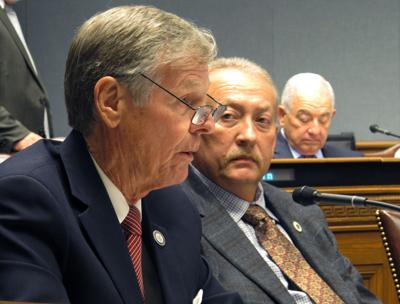
Rep. Hodges, R-Denham Springs, center, advanced two bills to mandate specific civics teachings in Louisiana. (Courtesy Louisiana House of Representatives)

Published: May 12, 2021

By: Emily Wood | LSU Manship School News Service

BATON ROUGE–Two bills that were met with backlashes in the House Education Committee still advanced on Wednesday to the House floor.

House Bill 352, authored by Rep. Valarie Hodges, R-Denham Springs, would require the teaching of the Declaration of Independence, the U.S. Constitution, the Federalist Papers, the Gettysburg Address and the concepts of national sovereignty, American exceptionalism, globalism and immigration policy.

It would retain present law to teach civics as a prerequisite for high school graduation, but these concepts and documents would be mandated in civics classes.

The bill has been controversial, and it became even more so on Wednesday when some legislators felt that an amendment proposed by Hodges seemed similar to a recent bill by House Education Committee Chairman Rep. Raymond Garofalo, R-Chalmette, that would have prohibited any teaching that the United States or Louisiana is systematically racist or sexist.

His bill was shelved after protests by members of the Louisiana Legislative Black Caucus. On Wednesday, Garofalo did not chair the hearing but instead came in and out of the room to vote.

Hodges’ amendment would have prohibited the Louisiana Education Department from approving materials that would teach “that a particular sex, race, ethnicity or national origin is inherently superior or inferior to another.”

That amendment failed on a tie vote, but the overall bill passed 8-5. Garofalo voted for the amendment and the bill.

“I truly do not understand how the chairman can be in another room and not presiding and then come in the room to vote,” said Brass, a member of the Legislative Black Caucus.

The committee also approved another Hodges bill, House Bill 416, that would mandate the instruction of World War II and the Holocaust to middle school and high school students. It would include mandated training to teachers instructing students on such history.

The bill would call on schools across the state to partner with the National WWII Museum in New Orleans to teach the curriculum.

Read more at brproud.com

Program to provide broadband money for qualified households

Published: May 12, 2021

By:  Emily Wood | LSU Manship School News Service

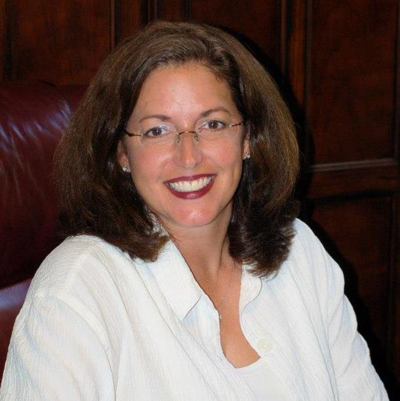
Leslie Dunham
Leslie Durham, chair of Broadband for Everyone in Louisiana, supports greater high-speed internet access. Courtesy of Leslie Durham

The Federal Communications Commission began taking applications Wednesday for the Emergency Broadband Benefit, a program to help American families and individuals struggling to afford internet service during the COVID-19 pandemic.

The program will provide a discount of up to $50 per month for qualifying households and $75 per month for qualifying households on tribal lands. The discount will go towards broadband service.

Qualifying households also may receive an additional $100 discount to purchase a desktop computer, laptop or tablet from a provider that agrees to pay at least $10 and less than $50 of the cost.

“We can flip a switch right now and everybody can have all the internet they need, but that does not mean everyone can get it because they cannot afford it,” said Leslie Durham, chair of Broadband for Everyone in Louisiana.

In Louisiana’s Legislature, House Bill 465, to auction off parts of the allocated 4.9 GHz in Louisiana, is awaiting final passage in the Senate. If passed, the bill would allow a winning bidder a three-year trial period with the high-speed spectrum.

The spectrum, along with the discount from the FCC, will provide faster internet service to people in Louisiana’s rural communities.

“Broadband is vital to the successful heath of our rural communities,” said Durham. “What we are doing if we cut ourselves short with broadband is deciding what community dies and what community lives. “

A household can qualify for the FCC’s discount if it meets at least one of the following criteria:

Read more at The Advocate

Bill to reduce transport time to expedite bail procedures advances in House committee

(Source: AP)

Published: May 12, 2021

By: Ryan Nelsen | LSU Manship School News Service

BATON ROUGE, La. – Two bills dealing with the release of incarcerated individuals were heard in a House committee Wednesday, with one passing and the other being deferred in the face of opposition.

HB83, by Rep. Bryan Fontenot, R-Thibodaux, advanced through the Committee on Administration of Criminal Justice. The bill expedites bail procedure by ending a requirement that an arrested individual must be transported to the parish where the warrants were originally registered before being released.

HB603, written by Rep. Wilford Carter, D-Lake Charles, did not pass, as he tried to adjust the amount of time that the Department of Corrections (DOC) takes to complete paperwork dealing with a detainee’s release.

A complication for Carter’s bill is that Louisiana is under a statewide civil investigation by the Department of Justice for its prisoner release practices.

“The United States Constitution requires that a person must be released within, at most, two days of their legal release date,” said Rebecca Ramaswamy, staff attorney of the Promise of Justice Initiative. “HB603 tries to give the DOC 40 days, or 10 days, or even three days. Anything more than two days past their legal release date, the state is violating that person’s rights.”

Ramaswamy told the committee that the bill “is trying to get the legislators blessing to continue to waste millions of dollars a year on unnecessary and unconstitutional over detention.”

Rep. Carter was not present at the meeting.

Another member of the Promise of Justice Initiative, Michael Calhoun, told the committee just how much over-detaining costs the state.

“In 2019, DOC found in one month, 231 people were affected,” Calhoun said. “Those people waited an average of 44 days to be released after a judge ordered them free.” He said the agency concluded that this pattern was costing the state $2.8 million a year in housing costs alone.

Read more at KALB

Bill would create fund to support the socioeconomic well-being of state’s rural population

Published: May 11, 2021

By:  Emily Wood | LSU Manship School News Service

Medicaid Contracts (copy)
State Rep. Francis Thompson, D-Delhi, left, Rep. Jack McFarland, R-Winnfield, at legislative hearing in October 2017.AP Photo by Melinda Deslatte

The Louisiana House Appropriations Committee advanced a bill Tuesday that would create the Rural Development Fund to support the socioeconomic well-being of the state’s rural population through better health, education and infrastructure.

Funding for the program would come from the sale of general obligation bonds, and authority to spend the money would be given to the state Office of Rural Development.

“Rural areas in Louisiana are losing population. We don’t have the job market, and we are also losing employment to Mississippi,” said House Bill 622 sponsor Rep. Francis Thompson, D-Delhi. “We have to develop or revitalize our rural areas if we want to be productive.”

Thompson said residents of metropolitan areas can look at this as a help for them, too, because people with better jobs in rural areas look to move to the more urban areas so their children can go to better schools, universities and community colleges.

HB 622 would give the director of the Office of Rural Development authority to hire a regional director in each of the eight regional planning commission districts of the state.

Thompson said that everyone in the state would be represented by an economic development expert. He said each director would receive about $60,000 a year, and each would come from the jurisdiction they would be representing.

Read more at The Advocate

Statute of limits for child sex abuse extension bill heads for Senate

Published: May 12, 2021

By: Kathleen Peppo | LSU Manship School News Service

BR.mississippiriver.adv HS 029.JPG
The State Capitol is seen on the Mississippi River, Saturday, April 10, 2021, in Baton Rouge, La. STAFF PHOTO BY HILARY SCHEINUK

Legislation to change the statute of limitations for child sexual abuse from 10 years to 35 years passed with without dissent in the Louisiana House Tuesday.

State Rep. Jason Hughes, D-New Orleans, says he brought House Bill 492 on behalf of every victim and survivor of child sexual abuse.

The bill will go to the Senate for further debate after passing 102-0 in the House.

According to the Rape, Abuse & Incest National Network, the largest anti-sexual violence organization in the country, a child is sexually assaulted every nine minutes. Only 5 in every 1,000 perpetrators, however, will be imprisoned.

National Child Protective Services found strong evidence between 2009 and 2013 that about 63,000 children per year were victims of sexual abuse.

Hughes said the average age at which victims of child abuse come forward about their trauma is 52.

HB492 would change the oldest age at which a victim can come forward and get justice from 28 to 53, extending the statute of limitations for child sexual abuse to one year past the average age at which victims report abuse.

Rep. John Stefanksi, R-Crowley, asked why the bill does not eliminate the statute of limitations entirely, ensuring victims a chance for justice regardless of age.

Read more at The Advocate

Newer school buses in Louisiana may be required to have seat belts if bill passes

Published: May 12, 2021

By: Kathleen Peppo | LSU Manship News Service

BATON ROUGE — The House passed a bill 55-44 Tuesday to require any school bus entering the school system in 2023 or after to have seat belts for passengers.

Rep. Robby Carter, D-Amite, said he brought the bill because he knows that the state will not be able to appropriate the funds to require seat belts for passengers in all school buses retroactively.

Carter brought a successful bill in 2004 to require seat belts in school buses, but he did not find a way to fund that bill. Now, 17 years later, he hopes to pass legislation that will actually make the change he meant to make earlier in his career.

The original bill would have required that every school bus already in the school system in 2004 have seat belts installed and that every school bus added to the system have seatbelts before entering. A legislative note on the 2004 bill estimated the cost at about $34 million, according to Carter.

“I’m a realist,” Carter said, noting that he knew it was hardly feasible to put that much money toward school bus seat belts.

The House passed a bill by Rep. Robby Carter to require school buses entering service in 2023 or after to have seat belts for passengers.
The house passed a bill by Rep. Robby Carter to require school buses entering service in 2023 or after to have seat belts for passengers. Courtesy of Rep. Robby Carter

The current bill is a compromise by which no buses must be retroactively fitted for seat belts, and seat belts will be phased in as new buses enter the school system beginning Jan. 1, 2023.

Read more at News Star

Anti-discrimination housing bill for LGBTQ community failed Monday

Rep. Aimee Freeman and housing rights advocate Maxwell Ciardullo testified Monday about her...
Rep. Aimee Freeman and housing rights advocate Maxwell Ciardullo testified Monday about her anti-discrimination bill.(Ryan Nelsen/LSU Manship School News Service)

Published: May 10, 2021

By: Ryan Nelsen | LSU Manship School News Service

BATON ROUGE, La. – An attempt to match Louisiana and federal laws on housing discrimination based over sexual orientation or gender identity failed Monday.

Rep. Aimee Freeman, D- New Orleans, said her bill, HB282, would have eliminated discrimination in housing sales and rentals to members of the LGBTQ community. An initial vote found the bill losing 7-4 in the House Commerce Committee before Freeman voluntarily deferred it.

Maxwell Ciardullo, the director of policy at the Louisiana Fair Housing Action Center, testified with Freeman on the importance of aligning state and federal laws.

“Someone might read our laws and think they could lawfully choose to discriminate against someone based on their gender identity issues and not to sell their home to them,” he said.

Rep. Edmond Jordan, D-Baton Rouge, an attorney, said the state could violate federal laws if the protected classes did not expand to include LGBTQ members.

Read more at KALB

Louisiana cemeteries segregation customs remain despite laws

Published: May 10, 2021

By: Allison Kadlubar, Bailee Hoggatt and Ezekiel Robinson | LSU Manship School News Service

BATON ROUGE (WVUE) – Jessica Tilson spent many Sunday mornings in the early 1980s playing outside with her white friends under the shady oak trees in front of the fleur-de-lis stained glass windows of the Immaculate Heart of Mary Church in Maringouin. But as soon as the church bells rang, they parted.

“When it was time to go into the church, it was time to split up,” Tilson said.

The church has a main entrance with double doors, but members typically enter through separate doors on the sides of the building – to the left for Black members, to the right for white members. Once inside, Black and white members sit on opposite sides of the sanctuary to worship in front of one altar – even though Tilson said the church abandoned formal segregation in the 1980s.

Jessica Tilson said Blacks and whites sit on separate sides of Immaculate Heart of Mary Church in Maringouin and are buried on separate sides in its cemetery.
Jessica Tilson said Blacks and whites sit on separate sides of Immaculate Heart of Mary Church in Maringouin and are buried on separate sides in its cemetery. (Source: Allison Kadlubar/LSU Manship School News Service)

Immaculate Heart of Mary Cemetery also divides graves by skin color on the left and right sides of the main pathway mirroring the church practices. The right side presents a spacious, organized pattern of granite and marble tombstones. The left side is crowded and scattered as many present-day graves are layered on top of people who, in life, were enslaved.

Immaculate Heart of Mary Cemetery in Maringouin is spacious on the white’s side and more crowded on the Black’s side.
Immaculate Heart of Mary Cemetery in Maringouin is spacious on the white’s side and more crowded on the Black’s side. (Source: Allison Kadlubar/LSU Manship School News Service)

“By it being a small town, the Blacks are related, and the whites are related,” said Tilson, now in her 30s. “It’s only natural that all of the Blacks would be on one side, and all of the whites would be on the other side. We still practice that to this day.”

Louisiana cemeteries no longer enforce racial segregation. But customs and practices remain, ensuring that many cemeteries throughout the state are still divided by race. Directors, managers and patrons of cemeteries statewide said that while the cemeteries do not reject the burial of anyone based on race, their plots do consist primarily of one skin color.

The exact number of cemeteries still practicing similar racial customs as those enforced in the Jim-Crow era is unknown. The Louisiana Cemetery Board has certified about 2,000 cemeteries across the state.

Read more at Daily Advertiser

Part of Louisiana’s history could change with new state motto, another state song

Published: May 7, 2021

By: Matthew Bennett | LSU Manship School News Service

BATON ROUGE — Amid lifted mask mandates, businesses re-openings and a barrage of economic recovery proposals in the Legislature, Louisianans may soon find some new changes to the history of the state itself. 

The House Judiciary Committee passed bills Thursday to establish a new state motto and to name “Southern Nights,” a song written by the late New Orleans music legend Allen Toussaint, as the fifth state song. 

Rep. Richard Nelson, R-Mandeville, brought up HB17, which proposes to change the state motto from “Union, Justice, Confidence,” to “We live and die for those we love.” 

Nelson said there was never a statute passed to establish the old motto, and that it was time to make official something that hit closer to home for Louisiana residents. 

“I think this motto is much more indicative of who we are as a people, what we believe and stand for as a people, and what sets us apart from everywhere else,” Nelson said. 

Rep. Richard Nelson proposee to change the state motto from “Union, Justice, Confidence,” to “We live and die for those we love.”
Rep. Richard Nelson proposes to change the state motto from “Union, Justice, Confidence,” to “We live and die for those who love.”

It was made clear that this was not a random phrase penned by Nelson either, as committee members pointed out that two iterations of the new motto appear on Louisiana law licenses and the walls of the Louisiana State Capitol. 

The representative also said he felt the old motto of “Union, Justice, Confidence” was a “rip-off” of Georgia’s state motto, “Wisdom, Justice, & Moderation,” which was established in 1776 when Georgia became the 13th U.S. colony. 

Read more at Daily Advertiser