By: Claire Sullivan and Gabby Jimenez, LSU Manship School News Service
The Senior National Political Correspondent for The Washington Post Ashley Parker and the White House Correspondent for The New York Times Michael Bender laugh on Thursday, Feb. 9, 2023, during their discussion on public distrust of media as part of a speaker series at the LSU Journalism Building in Baton Rouge, La. (Matthew Perschall)
Ashley Parker was enjoying sleeping in on a fall Saturday in 2019, her husband tending to their young daughter. Then her phone started vibrating nonstop.
President Donald Trump had tweeted out that Parker and her Washington Post colleague were “nasty lightweight reporters” who “shouldn’t even be allowed on the grounds of the White House because their reporting is so “DISGUSTING & FAKE.”
She had earned what political rivals and many covering Trump often received–a dismissive nickname. She kept her head down and kept working.
Parker, a senior national political correspondent at the Post, and her husband, Michael C. Bender, an author and White House correspondent for The New York Times, visited the LSU Manship School of Mass Communication Thursday to share their experiences as journalists covering Trump during his attacks on the press.
By: Claire Sullivan, LSU Manship School News Service
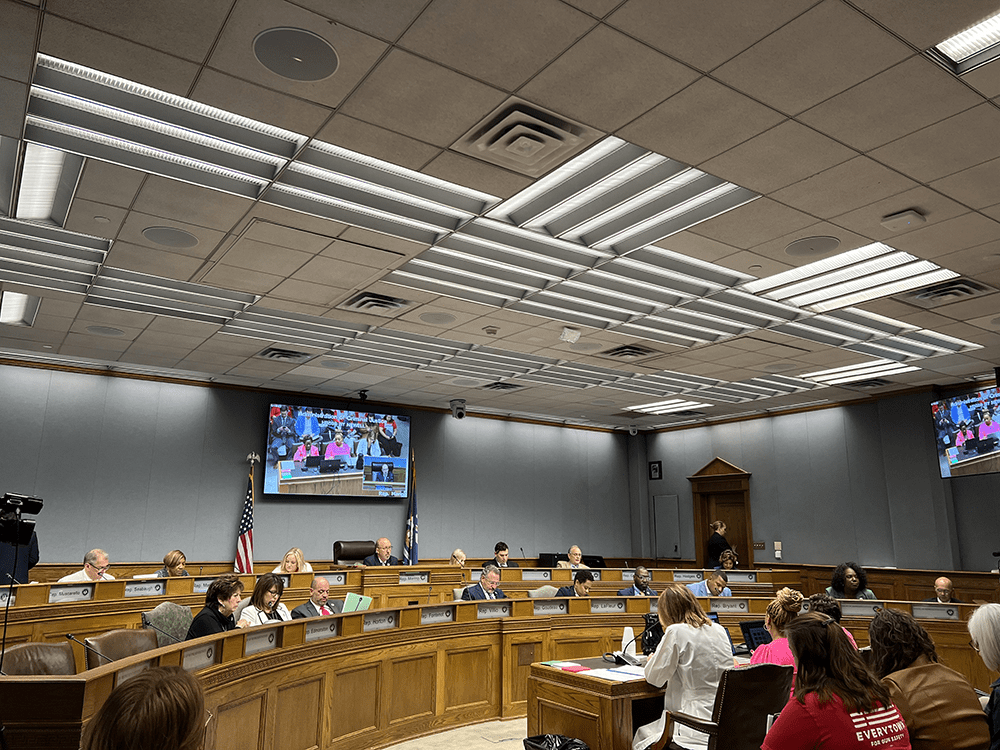
Lawmakers met in a special session to create a $45 million plan to expand home insurance coverage in Louisiana. (Francis Dinh/LSU Manship School News Service)
The Legislature approved bills on Friday to spend up to $45 million to lure home insurers back to the state.
The next stop is Gov. John Bel Edwards’ desk. The governor called the special session at the heeding of the state insurance commissioner and is expected to sign both bills into law—one to appropriate the funds for the Insure Louisiana Incentive Program and the other to prevent insolvent or bankrupt companies from receiving any of the money.
House Bill 1 to appropriate the funds passed the Senate 37-1 and the House 91-8. House Bill 2 to allow only solvent companies to receive the funds passed the Senate unanimously Friday after passing the House on Thursday.
Insurance companies will apply for grants, which will range from $2 million to $10 million. The companies will be required to match the state funds dollar for dollar, and they will have to remain in the state for at least five years or to return the money.
The plan is modeled after an incentive fund created in the wake of Hurricanes Katrina and Rita in 2005.
The urgency of the insurance crisis drove legislators to address the issue this week instead of waiting until the regular legislative session begins on April 10.
By: Claire Sullivan and Molly Ryan, LSU Manship School News Service
Senate President Page Cortez has voiced support for bills to create a fund to encourage home insurance companies to return to the state. (Francis Dinh/LSU Manship School News Service)
BATON ROUGE – The House on Wednesday approved bills to spend up to $45 million to encourage insurance companies to return to the state and to prevent firms that went bankrupt or were declared insolvent from using the money.
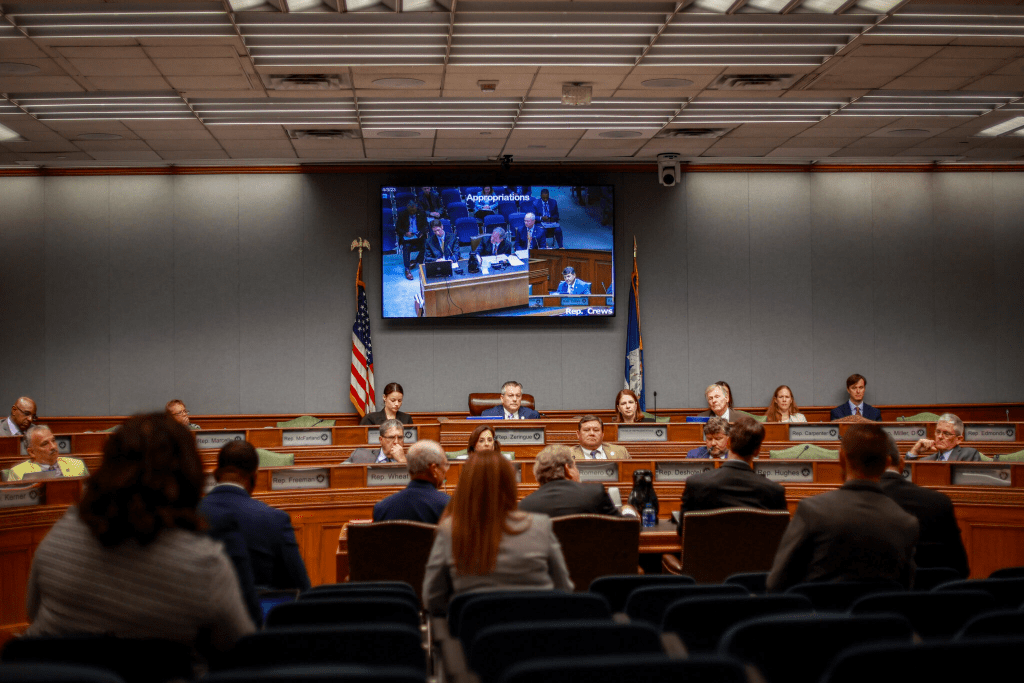
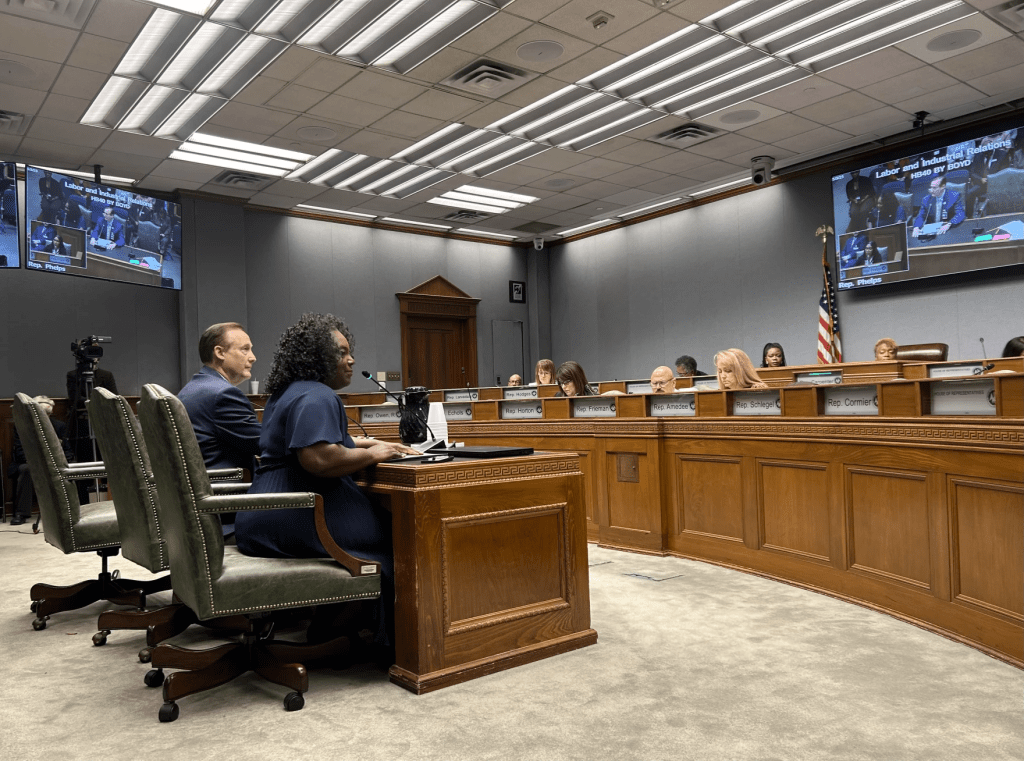
The House Appropriations Committee approved the two bills Tuesday before sending them to the House, where representatives questioned state Insurance Commissioner Jim Donelon about the details of the program.
The funds would be used to reduce the financial risk for insurance companies that resumed writing home and other property insurance policies in the state.
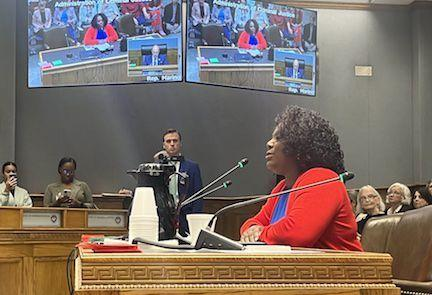
Donelon emphasized the urgency of the program for the 125,000 residents covered by the state’s insurer of last resort, the Louisiana Citizens Property Insurance Corp, as well as for those who cannot afford insurance at all.
Without the program, Donelon said, “Thousands of people are going to lose their homes.”
The bill now goes to the Senate, where the president, Sen. Page Cortez, R-Lafayette, has voiced support for it.
By: Claire Sullivan, Molly Ryan, LSU Manship School News Service
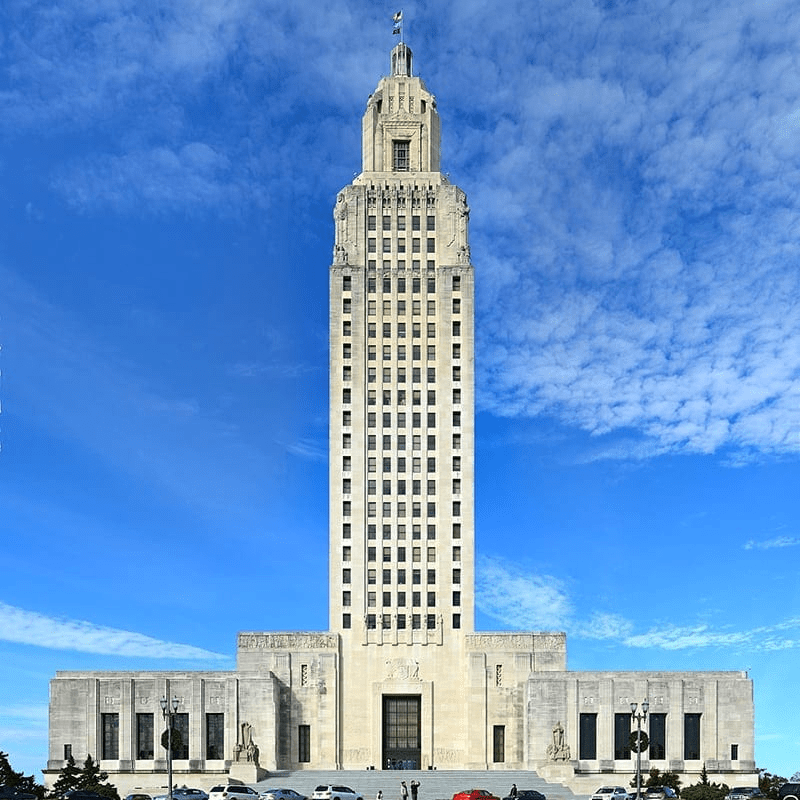
BATON ROUGE, La. — Legislators kicked off a special session Monday to address one agenda item: whether to approve $45 million for an incentive fund to persuade home insurers to come back to the state.
Two bills were introduced in the House Monday: one to appropriate funds for the Insure Louisiana Incentive Program and a second to place some restrictions on the use of those funds.
The second bill would exclude insurance companies that filed for bankruptcy or were declared insolvent or were owned by a parent company that was declared insolvent.
Lawmakers quickly adjourned for the day after referring the bills to the House Appropriations Committee. It is scheduled to consider them on Tuesday.
By: Claire Sullivan, LSU Manship School News Service
Neptune Pass, where the Mississippi River has cut a new channel through its east bank in Plaquemines Parish, LA(John Snell | WVUE)
BATON ROGUE, La. (LSU Manship School News Service) – Could the Louisiana of 2073 face less flood risk from hurricanes than it does today?
According to Coastal Protection and Restoration Authority officials, the answer could be “yes,” if their latest coastal master plan, released as a draft earlier this month, is fully implemented and predictions for more moderate environmental conditions prevail.
Officials brought the $50-billion draft plan to protect the coast before the authority’s board Wednesday, Jan. 18, in a pit stop in its months-long journey to approval from the Legislature, during which the plan will undergo public comment and revisions.
The coastal master plan is updated by the authority every six years, as required by state law. It lays out the 50-year future for Louisiana’s coast in terms of coastal land loss and flood risk–with and without its implementation.
By: Drew Hawkins and Claire Sullivan | LSU Manship School News Service
Gov. John Bel Edwards apologized Wednesday on behalf of the state to former Southern University protest leaders and the families of two Southern students shot and killed on campus in 1972. The governor then signed a proclamation formalizing the apology. Credit: Allison Allsop/LSU Manship School News Service
BATON ROUGE — Gov. John Bel Edwards apologized Wednesday (Nov. 16) on behalf of the state to former Southern University protest leaders and the families of two Southern students who were killed by an unidentified sheriff’s deputy 50 years ago.
“To the extent that the state of Louisiana can try to make this right, that’s what we’re gonna try to do,” Edwards said at an event at the Old State Capitol building to commemorate the 50th anniversary of the shooting.
Edwards said that on the morning of the shooting, students “bravely and peacefully” protested the disparities of educational opportunities in Louisiana.
He said the nine protest leaders who were banned from Southern’s campus following the protests were “unjustly punished.” He said he wanted “to make amends to those who were victims to injustices perpetrated by the state,” including the families of Leonard Brown and Denver Smith, the two 20-year-old students who were shot and killed.
He said wished to “recognize the lost potential of the lives” of the two young men.
The governor then signed a proclamation formalizing the apology.
By: Claire Sullivan, Brittany Dunn, Shelly Kleinpeter And Allison Allsop | LSU Manship School News Service
Last in a four-part series
Shunda Wallace was 3 months old when her father, Leonard Brown, and another student, Denver Smith, were shot dead by a sheriff’s deputy on Southern University’s campus in Baton Rouge in November 1972.
Fifty years later, Wallace still does not know who killed her father. The anger and the grief for a dad she never got to know burn in her, especially when her 18-year-old daughter, Raven, asks questions she cannot answer.
“I tell people, don’t ever say you don’t miss something that you didn’t have,” she said. “And I tell people all the time, something was taken from me at a very early age that was senseless.”
In the aftermath of the shooting lay a future marked with grief for family members of the victims and a period of uncertainty for protest leaders, who were expelled from Southern. But the protests also helped produce some of the changes that the students wanted to see. And the shooting brought to the fore questions about excessive police force that still haunt Baton Rouge and the nation today.
The shooting came after several weeks of protests and class boycotts over what the students saw as poor funding, dilapidated buildings and little response to their concerns.
By: Drew Hawkins, Adrian Dubose, Allison Allsop and Alex Tirado | LSU Manship School News Service
Third in a four-part series.
At 12:35 p.m. on Nov. 17, 1972, the phone rang in the office of acting FBI Director L. Patrick Gray in Washington.
It was Deputy Attorney General Ralph Erickson, calling to order an investigation into the shooting of the two students at Southern University amid a cloud of tear gas 25 hours before.
FBI officials quickly made plans to send dozens of agents from across the country, including some who had investigated shootings at Kent State and Jackson State. The first group arrived in Baton Rouge two days later, setting up in the Capitol House Hotel, a white-painted, square brick building downtown.
“It took us just overnight to set up the office,” said Jack Stoddard, an agent from Philadelphia. On Monday morning, Nov. 20, he said, “assignments were given out.”
Within three days, the FBI knew that the students, Denver Smith and Leonard Brown, had been killed by a single blast of buckshot – and that the shot had likely been fired by one of the East Baton Rouge Parish sheriff’s deputies near a palm tree in front of the school’s administration building.
Medical examiners removed 17 tiny shotgun pellets from the men’s bodies. Three more pellets had dented the wall of the building right behind where the men were hit as they ran from the tear gas.
Rickey Hill and Herget Harris, two protest leaders at Southern University, peeked out and saw sheriff’s deputies outside their apartment.
Hill had been arrested the week before for disrupting the campus. Now, on Nov. 16, 1972, the deputies were looking for Harris and others in their Students United protest group.
Harris jumped out a rear window to avoid detection. After the deputies left, he and Hill learned in a hurried call that Fred Prejean, a 25-year-old community activist, and three other students were being taken to jail.
Hill and Harris decided to ask Southern’s president, George Leon Netterville, to secure the students’ release. As they and their supporters walked toward the two-story brick administration building around 8 a.m., students ran up to find out what was going on.
“So they followed,” Harris said, and “the following grew as we continued on.”
By 8:30 a.m., 75 students were outside the building – some members of Students United, others just curious onlookers. Netterville, who was fed up after weeks of demonstrations and boycotts over the quality of education at Southern, agreed to let Hill, Harris and three others into his wood-paneled office.
By: Claire Sullivan, Brittany Dunn, Shelly Kleinpeter and Annalise Vidrine | LSU Manship School News Service
First in a four-part series.
Josephine and Denver Smith took different approaches to protests at Southern University in the fall of 1972. Josephine skipped class for meetings, while her older brother stayed away and warned her to be careful.
The pair had grown up with 10 other siblings in a tiny sharecropper’s house near New Roads, Louisiana, where they picked cotton in the hot sun and harvested pecans to help make ends meet. When they were not working, they fished, swam by the river levee and, not having paper, scratched their multiplication tables in the dirt with sticks, the oldest checking the work of the youngest.
Despite their modest finances, one thing was always certain: They would go to college.
One by one, the siblings enrolled at Southern University in Baton Rouge. Denver was the third to go, followed by Josephine the next year. And while Josephine lived in a dorm amid the growing campus ferment, Denver – 5 feet, 9 inches and slim – walked each morning to a white-framed Catholic church, where he hopped on a school bus for the hour-long journey southeast to Baton Rouge.
The protests at Southern in October and November 1972 echoed what was happening around the United States in an era of civil rights and anti-war activism. Southern — the main campus in a university system that had the most significant number of Black students in the country — had its own history of activism that began with lunch counter sit-ins. By 1972, many of its 9,000 students in Baton Rouge were tired of what they saw as poor funding and teaching, dilapidated buildings, and a lack of responsiveness to their concerns.
From those frustrations came weeks of protests, class boycotts, and demands for a change in the school’s leadership. Rather than sticking with negotiations, university officials repeatedly summoned sheriff’s deputies and state troopers onto campus—and a standoff between roughly 150 students and 85 heavily armed officers on Nov. 16 ended in tragedy.
Amid the chaos and tear gas, a single blast of buckshot fired by a deputy from the East Baton Rouge Parish Sheriff’s Office killed two 20-year-old men in a stream of fleeing students.