Bill proposes end to Louisiana’s ‘tampon tax’

Screen Shot 2019-05-17 at 6.02.27 PM
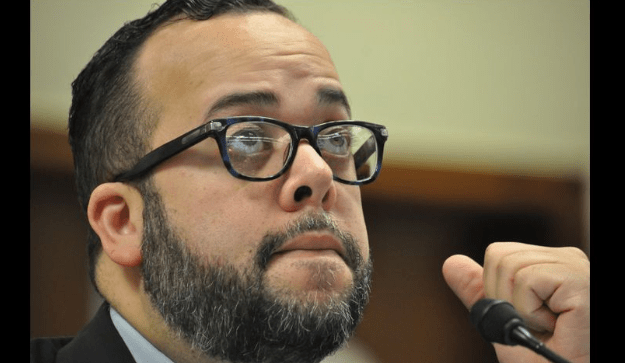
Sen. Jean-Paul J. Morrel, D-New Orleans (Photo credit: Sarah Gamard, LSU Manship School News Service)

Published: Apr. 22, 2019

By: Hunter Lovell, LSU Manship School News Service

BATON ROUGE- Louisiana lawmakers signaled support for legislation that would exempt diapers and feminine hygiene products, including tampons, from state sales tax.

The so-called “tampon tax” or “diaper bill” is back on the radar. The bills were filed by Sen. J.P. Morrell, D-New Orleans, who received a lot of pushback in 2017 when he introduced similar proposals.

Both bills — one to exempt the products from state tax and the other to give local government the option to exempt them from local taxes — are co-sponsored by Rep. Walt Leger III, D-New Orleans.

Low-income families and poor people often struggle to afford health and wellness products, which are currently taxed at the regular rate.

“There are moms that can’t afford diapers,” Morrell said. “They have to go basically to a food bank for diapers to provide diapers for their children. Diapers are expensive, and if you’re paying 30 to 40 bucks for a large pack of diapers, you’re paying $3 to $4 of tax on top of that. For some of these low-income families that makes or breaks the bank.”

Read more in WBRZ.

Gov. Edwards testifies before the House committee on bill to protect LA residents with pre-existing health conditions

24GOV-Photo-Edwards
Gov. John Bel Edwards speaks to the press at a luncheon hosted by the Louisiana Press Association at the City Club in Baton Rouge. (Photo credit: Madeline Meyer, LSU Manship School News Service)

Published: Apr. 25, 2019

By: Lauren Heffker and Madeline Meyer, LSU Manship School News Service

BATON ROUGE — Gov. John Bel Edwards testified before a House committee Wednesday in support of a bill that would protect 850,000 state residents with pre-existing conditions if the federal Affordable Care Act is repealed.

The bill, sponsored by Rep. Chad Brown, D-Plaquemine, is part of Edwards’ legislative package and would prohibit discrimination against health insurance applicants due to pre-existing problems.

“This is not the political thing to do,” Brown said. “It’s the right thing to do.”

Brown also proposed an amendment that would keep his bill from taking effect if the Affordable Care Act, also known as Obamacare, is completely overturned in court. If the federal act is partially invalidated in a way that strips protections of pre-existing conditions but leaves the subsidies in place, the bill would go into effect.

Without federal funding, protections for pre-existing conditions could lead to millions of dollars in premium increases. If Brown’s bill does not pass or if the subsidies are not there, no protections would be guaranteed.

The committee deferred voting on the bill, which would not have an impact on state revenues or spending.

Edwards said that while the bill is not a perfect substitute for current provisions in federal law, it deserved bipartisan support. “It seeks to protect those portions of the Affordable Care Act that just about everybody believes in,” he said.

Read more in the Bossier Press-Tribune.

Buying license plates for Steve Gleason’s foundation one step closer to becoming a reality

5c3035372f4f0.image
Saints players Thomas Morstead, Zach Strief and Wil Lutz pose with Steve Gleason during Steve Gleason’s Seventh Annual Inspire Birthday Celebration at Fulton Alley in New Orleans on Thursday. (Photo credit: Sophia Germer, Advocate Staff)

Published: Apr. 22, 2019

By: James A. Smith

A Louisiana House committee approved a bill to let Louisiana residents buy Team Gleason Foundation license plates to help a former New Orleans Saints player in his fight against ALS.

Steve Gleason, one of the most beloved players in Saints history, was a safety from 2000 to 2008 and was diagnosed with ALS, also called Lou Gehrig’s disease, in 2011. He and his wife established the Team Gleason Foundation shortly after that to inspire and show other ALS patients they “can not only live but thrive.”

Most Saints fans recall his blocked punt against the Atlanta Falcons, which helped lead the Saints to victory, on the night the Superdome reopened after Hurricane Katrina.

In 2014, Gleason and his organization hosted a summit for researchers, patients and caregivers to brainstorm a plan to end ALS in our lifetime. The summit resulted in the formation of Answer ALS, the largest ALS research project in the world.

The highest-ranking Democrat in the House, Walt Leger III, of New Orleans, sponsored the bill, which requires a $25 annual royalty fee that will be forwarded to the Team Gleason Foundation.

“I’m sure I don’t need to lecture the committee on the impact of Steve Gleason,” Leger said.

Read more in The Advocate.

LSU Survey: Majority of residents support legalizing sports gambling, some marijuana

11SURVEY+Photo+Report+Logo
The strongest support for legalizing sports betting comes from the New Orleans area, survey says. (Photo credit: LSU Manship School News Service)

Published: Apr. 18, 2019

By: Madeline Meyer

BATON ROUG– Majorities of Louisiana residents support legalizing gambling on professional sports and possession of a small amount of marijuana for recreational use while opposing stricter gun laws, according to an LSU survey released Thursday.

The Legislature is expected this spring to consider legalizing sports gambling. Statewide, 59 percent of survey respondents support the idea while only 35 percent oppose it.

There is virtually no difference in opinions on the issue between Republicans and Democrats. The distinctions lie among the age groups.

Over 70 percent of respondents from ages 18 through 49 support sports betting. However, support drops to 53 percent among adults age 50 to 64 and to 38 percent of adults who are 65 or older.

Democratic Governor John Bel Edwards recently told the Press Club of Baton Rouge: “There are many different ways that sports betting can be undertaken. We’re trying to figure out what works for Louisiana.”

Edwards, who is running for re-election, expressed concern that Louisiana casinos are losing money to ones in Mississippi, which already legalized sports betting. But The New York Times reported this week that casinos in Mississippi and several other states that legalized sports betting are not bringing in as much money as they had expected.

Read more in FOX8Live.

Edwards faced ‘brick wall’ in efforts to tackle K-12 education

Published: Apr. 16, 2019

By: Sheridan Wall and Charlotte Bellotte, LSU Manship School News Service

BATON ROUGE — Gov. John Bel Edwards placed K-12 education near the top of his priorities in his 2015 campaign, and he has emphasized his support for teacher pay raises in this year’s re-election bid.

But given opposition in the Legislature, Edwards has not reversed controversial Jindal-era education policies that he routinely opposed as a state representative.

Back then, Edwards voted against measures to amend the school voucher program, base teacher evaluations in part on student achievement, make it tougher for teachers to get tenure and limit benefits for teachers who are rehired after they retired.

Rep. Stephen Carter, R-Baton Rouge, the former chairman of the House Education Committee, said that when Republican Bobby Jindal was governor, Edwards “argued against some of the things we were trying to do.”

“John Bel was on the committee, and he was not for them,” said Carter, who sponsored some of the bills. Carter said that teacher unions “backed him heavily” when Edwards ran for governor saying he would undo some of the changes.

But Edwards’ main success in this area has been to reduce the impact of students’ standardized test scores on teacher evaluations, something that the pro-Jindal camp in the Legislature did not oppose.

Edwards’ lack of headway on K-12 initiatives also has been due to the budget crises that dominated his first three years as governor, aides say.

Read more in the Shreveport Times.

Survey: 76% of Louisianians support Medicaid expansion among working poor

11SURVEY+Photo+Report+Logo
(Photo credit: LSU Manship School News Service)

Published: Apr. 11, 2019

By: Sydney Tardy

BATON ROUGE– A survey revealed that 76 percent of Louisiana residents support a program that expanded Medicaid among the working poor, but Republicans are more likely to be concerned about the potential cost of the program.

The Public Policy Research Lab at the LSU’s Manship School of Mass Communication conducted the survey of 917 adults across Louisiana.

Gov. John Bel Edwards, a Democrat, expanded Medicaid in 2016 to include people earning up to 38 percent above the poverty line, and that has added nearly 500,000 people to the rolls. Edwards, who is running for re-election, cites the expansion as one of his main accomplishments.

But Republican gubernatorial candidates and lawmakers have complained that the program has not been as tightly managed as it should be. And even though the federal government now pays more than 90 more of the costs, they have expressed concerns about the future cost to the state.

Read more in KALB.

The new fight: Securing civil rights fighters ‘Deacons’ in history

RHAZB75BMRHMVEW6FPQWRCRBQY
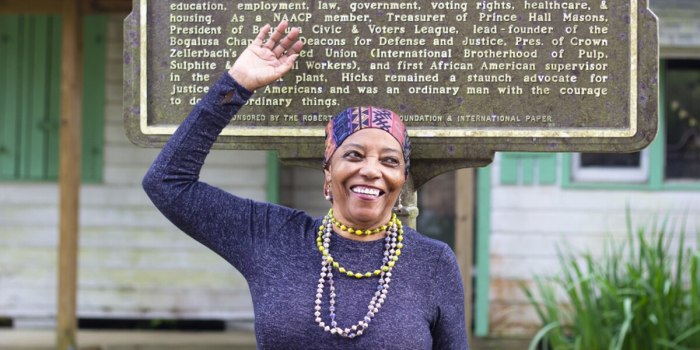
Barbara Hicks-Collins stands in front of her father’s historic house, which she would like to turn into a museum. (Photo credit: Alyssa Berry/LSU Manship School News Service)

Published: April 25, 2019

By: Jace Mallory, Caroline Fenton and Brennen Normand

BOGULASA– “That’s my daddy,” Barbara Hicks-Collins, now 72, said as her hand gingerly swept across the image on the Louisiana Historical Site landmark.

Her father, Robert “Bob” Hicks, was an integral part of the Deacons for Defense and Justice, a black group that combatted the Ku Klux Klan in parts of Louisiana and Mississippi in the 1960s.

Barbara Hicks-Collins recognizes the plot of land where she once lived as both a home and a headquarters, and she has been seeking grants and holding fundraisers since her father died in 2010 to try to turn it into a museum.

“I look at it two ways,” Hicks-Collins said. “One is the family house, ‘cause that’s where I grew up and all my siblings and parents, and so we have some very good feelings about this house. And then on the other hand is civil rights. And it dictated so much pain and suffering as we went through the civil rights movement.”

Her father’s work as a Deacon gives her inside knowledge of a group that few people know about. Her home being the headquarters for Deacons’ meetings led to both federal and state landmark designations. And turning it into a museum will provide the most important piece to her—the memory of what happened from which others can learn.

Read more at Fox8Live.

Education leaders request increased funding for higher education

11EDUC-Photo
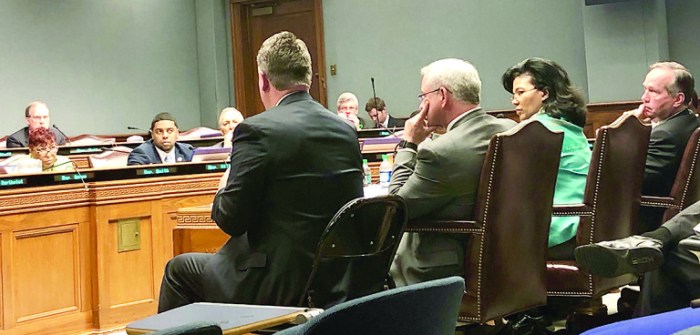
Monty Sullivan (President of the Louisiana Community and Technical Colleges System), Jim Henderson (President of the University of Louisiana System), Kim Hunter Reed (Commissioner of Higher Education) and F. King Alexander (President of the Louisiana State University System) appeared before the House Appropriations Committee on Wednesday. (Photo credit: Lauren Heffker, LSU Manship School News Service)

Published: Apr. 25, 2019

By: Lauren Heffker, LSU Manship School News Service

Higher education leaders called on legislators Wednesday to increase funding for state colleges in next year’s budget. The budget bill, proposed by House Appropriations Committee Chairman Cameron Henry, R-Metairie, would maintain current funding for colleges, but fall about $12 million short of fully financing the popular TOPS scholarship program.

That version of the budget did not include the $119 million of additional state revenue projected by the Revenue Estimating Conference earlier that day. So lawmakers will have more money at their disposal and will face pressure from parents and students to avoid cuts to the scholarship program. Louisiana lags behind most states in re-investing in higher education, Daniel Waguespack, a House fiscal analyst, told the committee. “Remember, we’re really just now starting to stabilize higher education in the state of Louisiana,” he said.

In his opening address to the Legislature on Monday, Gov. John Bel Edwards said he wanted to increase funding for higher education. Education leaders credit Edwards with stabilizing state universities after years of budget cuts by former Gov. Bobby Jindal. Public universities and community colleges across the state are still funded below the Southern Regional Educational Board average for each full-time student.

Among the 16 member states, Louisiana ranks last, according to a report by the House Fiscal Division. While the enrollment for four-year and specialized colleges has remained consistent since the fall of 2010, they still had to raise tuition and fees to pay faculty and offset rising mandated costs for pensions and other expenses that are not funded by the state, administrators said.

Read more in the Natchitoches Times.

Will a new bridge over the Mississippi ease I-10 traffic?

Screen Shot 2019-05-17 at 5.25.44 PM
The Horace Wilkinson Bridge, more commonly referred to as the “new bridge” over the Mississippi River, fills with traffic. (Photo credit: Trey Couvillion/LSU Manship School News Service)

Published: Apr. 10, 2019

By: Trey Couvillion, LSU Manship School News Service

BATON ROUGE — Two months have come and gone since the first meeting of the Capital Area Road and Bridge District, the newly formed coalition trying to develop a new bridge over the Mississippi River.

Drivers from all over the capital region and commuters from Lafayette, New Orleans and Lake Charles feel the strain of the more than 100,000 vehicles crossing the Mississippi River daily. The new bridge, supporters hope, will solve traffic woes in the Baton Rouge area.

But the price tag and location are still unclear.

Officials of the five parishes in the area met again on Tuesday. They selected Jay Campbell, the former president and chief executive of Associated Grocers, appointed by Gov. John Bel Edwards, as chairman of the board and discussed plans to pick a project manager.

Louisiana’s Department of Transportation and Development estimates that the bridge alone could cost anywhere between $733 million and $1.06 billion in the five options laid out in a 2016 study.

Deputy Transportation Secretary Eric Kallivoda said agency officials would meet with the modeling staff of the Capital Region Planning Commission to discuss the best locations.

West Baton Rouge Parish President Riley Berthelot Jr. said, however, that state officials had eliminated the most northern and southern options, leaving three possible bridge sites.

Read more in the Daily Advertiser.

State revenue estimated higher for this, next year

10REVENUE-Photo-Alario-and-Barras-768x527
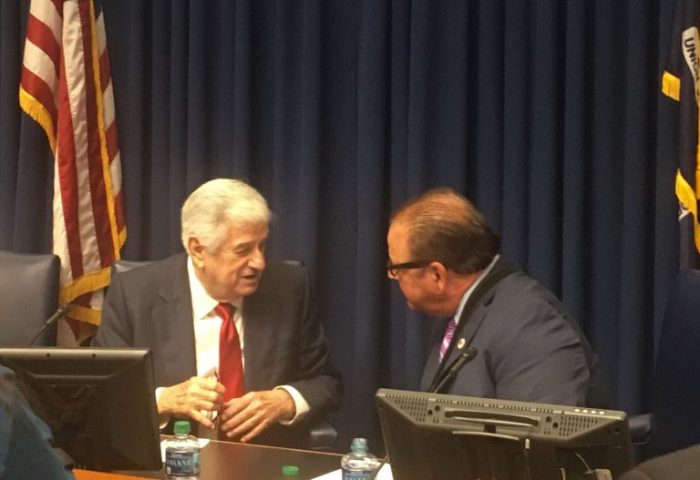
Senate President John Alario, R-Westwego, and House Speaker Taylor Barras, R-New Iberia, talk after the revenue-estimate meeting. (Photo credit: James A. Smith/LSU Manship School News Service)

Published: Apr. 10, 2019

By: James A. Smith, LSU Manship School News Service

BATON ROUGE–The group that projects the state’s revenue finally recognized a brighter outlook after months of partisan infighting.

The state’s Revenue Estimating Conference on Wednesday reached the unanimous vote needed to increase this year’s state general fund forecast by $110 million and next year’s forecast by $119 million.

Now that the forecast is approved, lawmakers are tasked with deciding what to do with the extra revenue.

Gov. John Bel Edwards has proposed spending it on a pay raise for teachers and other state programs. But before the new forecast was approved, legislators had begun debating cuts in some programs since they cannot pass a budget that is not balanced.

The legislative session just started Monday. So approval of the new forecast now could make it easier for Democrats and Republicans to agree on a budget with less rancor than has been the case in recent years.

Read more in the Minden Press-Herald.