Louisiana House agrees to let colleges continue to set fees

BR. legopening.050520. 0203 bf.JPG                               (Photo Credit: Bill Feig)

Published: May 15, 2020

By: Hailey Auglair, LSU Manship School News Service

The Louisiana House passed legislation Friday that would let public colleges and universities in Louisiana continue to set the levels of their mandatory undergraduate student fees.

The institutions must report any changes in fees to the Legislature and explain why they decided to adjust them.

Universities have raised fees substantially in recent years to offset cuts in state appropriations, and a law allowing them to set the fee levels was due to expire on June 30.

All 95 of the House’s 104 members attending Friday approved House Bill 689, sending it to the state Senate for consideration.

Many students and their families have been upset about the steadily rising fees. But with the state facing a budget hole of at least $1 billion as a result of the COVID-19 pandemic, universities are bracing for more cuts in state appropriations. The extension would provide them with leeway to raise fees if they cannot otherwise make up the shortfalls.

The universities turned to fees to raise funds because Louisiana, unlike most states, requires legislative approval of tuition increases.

During another freeze in state aid in 2018, LSU raised student fees about $282 a student, for a total of about $17 million, according to a report from The Advocate.

Interim LSU System President Tom Galligan said recently that he is planning for about a 10% cut in state funding, and LSU has instituted spending and hiring freezes.

Galligan added that the university gets most of its funds from tuition and fees and only 25% from taxpayers. LSU officials have said in that 75% to 80% of the school’s budget came from state appropriations a decade ago.

Read more at The Advocate.
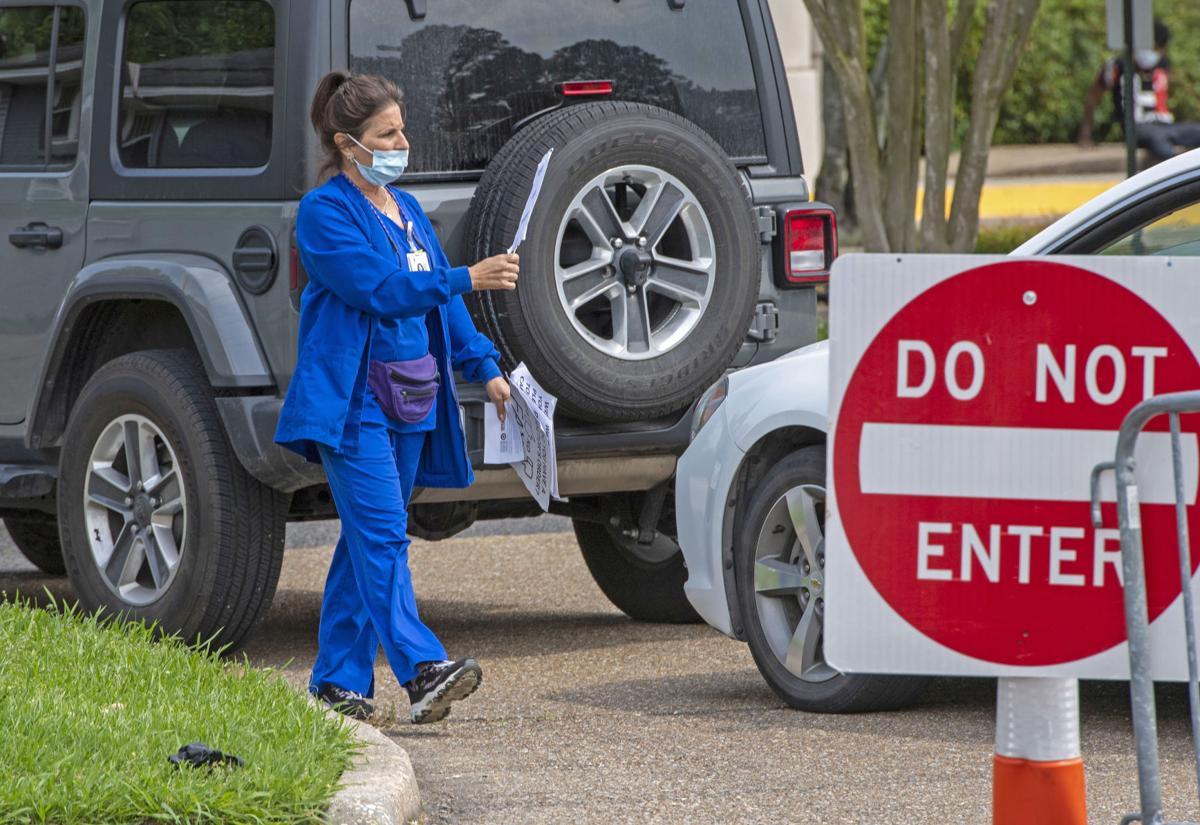
Contract tracing tracks coronavirus spread, but Louisiana lawmakers are reluctant to embrace it

BR.covid19testing.033120. 0083 bf.JPG (Photo Credit: The Advocate)

Published: May 13, 2020

By: Kathleen Peppo, LSU Manship School News Service

Republican Louisiana legislators said this week that many of their constituents are uneasy about contact tracing, a key tool in the state’s COVID-19 recovery plan to determine who has been in contact with someone who tests positive for the virus so they can quarantine and prevent further spread.

As Louisiana residents have become eager to return to work and see economic revival, Gov. John Bel Edwards has announced what he sees as a reopening plan based on advice from health experts and White House guidelines. The plan includes ramping up the state’s COVID-19 testing and contact-tracing capacities to enter the first phase of reopening on Friday.

Under President Donald Trump’s guidelines, contact tracing is crucial to reviving the economy while continuing to protect public health and safety, and a bill passed by Congress requires states to submit plans for testing and tracing to receive federal funds to pay for them.

National epidemiology experts say that no state can reopen safely without contact tracing to keep the virus from spreading again.

Rep. Raymond Crews, R-Bossier City, said his constituents have expressed discomfort with the idea.

“A lot of people are very reluctant to embrace the idea of contact tracing,” Crews said at a hearing. “We don’t know the extent of it. We don’t even know if there will be repercussions for people who choose not to answer the questions or isolate. There are no answers to my questions, so I’m very reluctant to embrace any idea for financing this stuff if we don’t even know what the plan is.”

“There are still states’ rights, and a lot of people here in Louisiana put a big premium on liberty,” Crews said.

Rep. Jack McFarland, R-Jonesboro, spoke of a similar reaction among residents of his district.

“My phone rang off the hook this weekend with calls about this contact tracing,” McFarland said Monday.

Edwards said the state will have the capability to administer 200,000 tests a month for COVID-19. It also has created a group of 250 people to begin making contact-tracing phone calls Friday. This gives the state the capacity to make over 700 calls in four weeks.

Read more at The Advocate.

Bill to increase penalties for felons possessing guns moves forward

Published: May 12, 2020

By: Paige Daniel, LSU Manship School News Service

BATON ROUGE—A Senate committee voted 4-1 Tuesday to forward a bill that would designate possession of a firearm by a person convicted of a felony as a crime of violence.

Currently, the minimum sentence for possession of a firearm by a convicted felon is five years. Changing the possession of a firearm by a felon to a crime of violence would ensure harsher penalties, such as lengthier jail sentences.

Mike Ronats, executive director of the Louisiana Sheriff’s Association, cited statistics showing that between 25% and 48% of murders involving firearms are committed by felons.

According to the Louisiana Commission on Law Enforcement, there were 436 homicides committed with firearms in the state in 2018. This means between 109 and 210 of the murders were committed by felons.

“The decision that we make today is not just about this crime,” Ronats told the Senate Committee on the Judiciary C. He added: “It’s about how that crime affects the other crime, the larger picture, and that being homicide.”

Sheriff Mike Tregg of St. John the Baptist Parish is also a proponent of the bill, which was proposed by Sen. Bodi White, R-Baton Rouge.

“I have too many young men dying,” Tregg said. “I intercept their social media. They’re fascinated with guns. Children, 15 years old. I’m only here today to ask you guys to strengthen what we’re doing so we can send a message before they commit that crime.”

Sen. Troy Carter, D-New Orleans, opposed the bill, stating that it was “chipping away at criminal justice reform.” Carter also questioned its urgency, saying violent crimes have gone down and that the bill would add to the state’s corrections costs.

“We are going to be facing undoubtedly an unprecedented deficit because we have so many unknowns,” Carter said.

Read more at KALB.com.

Virus impact on Louisiana state finances pegged at $1B

(Photo Credit: MGN)

Published: May 11, 2020

By: Catherine Hunt, LSU Manship School News Service

BATON ROUGELouisiana’s revenues are expected to drop by $1 billion or more due to the coronavirus, threatening cuts to services in the fiscal year starting July 1, state economists told the Revenue Estimating Conference Monday.

The four-member group adopted the lower forecast, which could translate into a 10 percent cut in the state’s discretionary funding, as Louisiana grapples with high levels of unemployment, falling oil prices and business closures because of the pandemic.

“There’s no crisis we’ve had that even comes close to this,” said Greg Albrecht, the Legislature’s chief economist.

The economists released their estimates shortly before Gov. John Bel Edwards announced that the state will be entering the first phase of the reopening process on Friday. He said he would loosen restrictions on businesses such as restaurants, gyms and salons. These businesses, along with churches, will be allowed to operate with 25% occupancy. However, bars, amusement parks and tattoos parlors will remain closed.

Even so, Albrecht projected an $867 million loss in general tax collections in the next fiscal year and about $165 million in tax and fee dollars for specific agencies.

Health services and higher education are typically the most vulnerable to budget cuts because they are not protected by mandated spending laws.

Falling oil and gas prices are responsible for much of the damage. Albrecht and Manfred Dix, the chief economist for Governor Edward’s administration, projected oil prices to be between $28 to $32 a barrel.

In addition, the projection calls for revenues to decrease by $362 million in the current fiscal year, with $123 million of that total coming from the state’s general tax collection.

Albrecht and Dix said they are highly uncertain of most of their estimates, since the data is distorted because of the coronavirus. It is difficult to determine how people will react once businesses do reopen, they said.

“People have to feel comfortable going out,” Albrecht said, “I don’t think people are going to be real comfortable for a while.”

Read more at KALB.com.


Will mail-in ballots be expanded in Louisiana due to coronavirus?

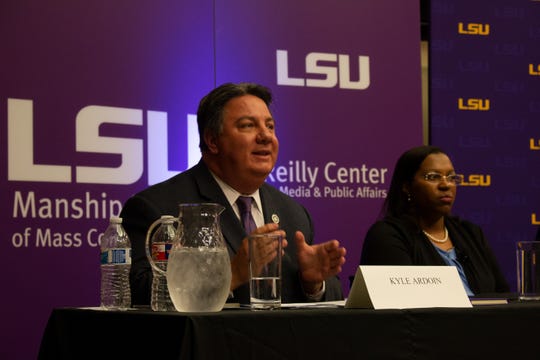
Secretary of State Kyle Ardoin proposed greater temporary use of mail-in ballots than the Legislature was willing to approve.

Published: May 2, 2020

By: Paige Daniel and Abigail Hendren, LSU Manship School News Service

BATON ROUGE — Three blue states — Washington, Oregon and Colorado — conduct all of their elections through mail-in votes, and four red states — Wyoming, Montana, Utah and Alaska — are joining them this year in conducting their presidential primaries entirely through mail ballots.

Since the COVID-19 outbreak began, 28 other states have announced plans to increase access to absentee ballots or take other actions to keep voters from lining up at polling places.

Yet, in deciding on Tuesday to delay Louisiana’s presidential primary to July 11, the Legislature insisted that state election officials scale back plans to rely less on in-person voting and more on mail voting to reduce the health risks.

Republican legislators expressed concern that more mail-in ballots could increase the potential for voter fraud. But national election experts say there have been few instances of fraud as other states have expanded voting by mail. And even once the risks from the virus ease, they say, Louisiana could increase voter turnout if it made greater use of alternative voting methods.

Voter turnout in governor’s races in Louisiana declined steadily for several decades, from 54% in 1979 to 31% in 2011 before rebounding to 51% last fall, according to the Louisiana Secretary of State’s office. Turnout in presidential elections in Louisiana has stayed higher, at 55% to 60% of eligible voters, though voting-rights advocates fear it could slip this year if voters do not feel safe.

Voting by mail is “something we’ve thought was important for a while now, but with the current state of the world, we now believe it is not only important, but essential to the democratic process,” Catherine McKinney, the director of the Louisiana Vote-by-Mail initiative, said.

“Now it is not only easier but imperative to keeping our poll workers and our voters safe from a global pandemic,” she said.

Read more at the Shreveport Times.

Sons of Klansmen haunted by sins of their fathers

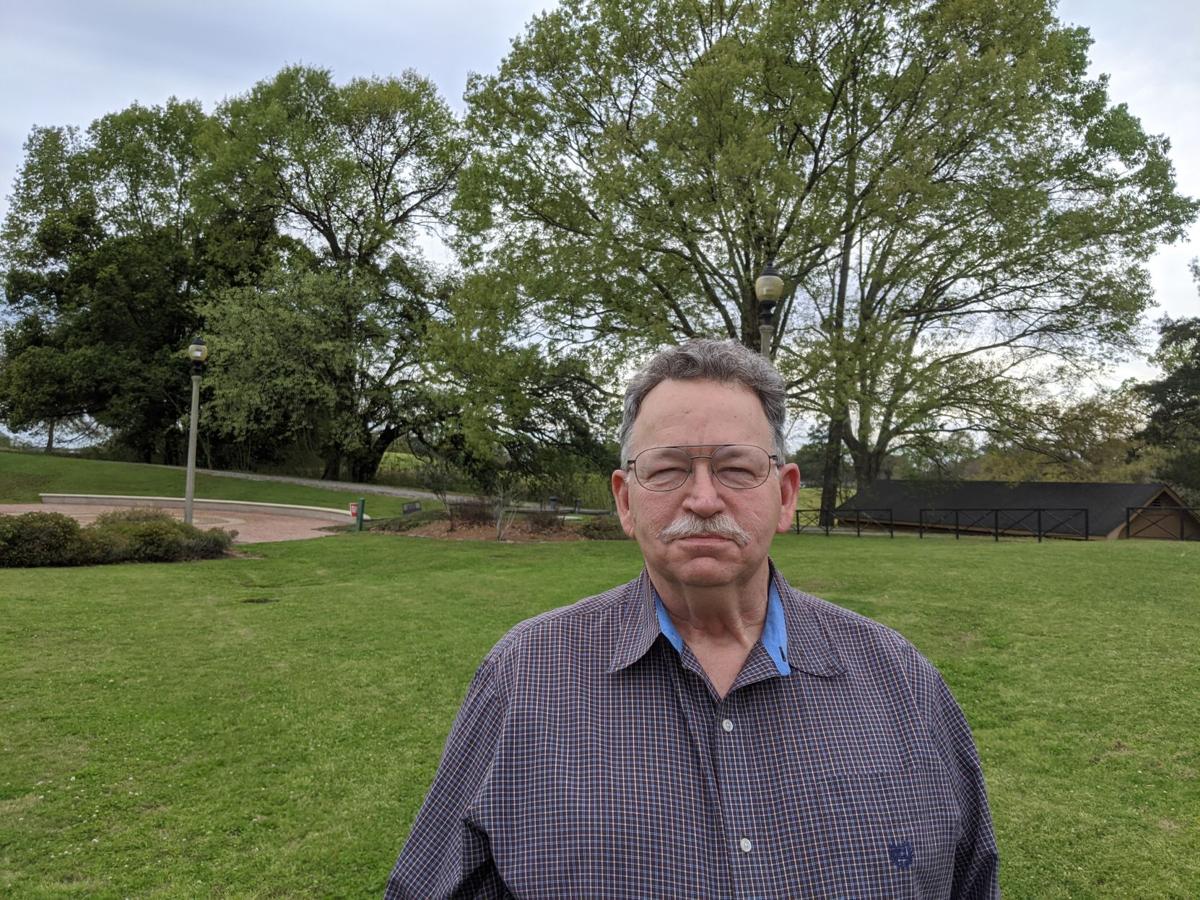
James Poissot

Published: April 28, 2020

Children of Klansmen are sometimes haunted by the sins of their fathers.

James Poissot, of Baton Rouge, never knew his father, but knew he was a violent man who beat James’ mother so severely decades ago that she miscarried.

In Rayville, the late William L. “Boo” Spencer grew up under the direct influence of his dad and consequently spent time behind bars, at times raging against the world and spewing racist hate.

Although the two sons never knew one another, James Poissot and Boo Spencer shared a common bond: their fathers were implicated in the same half-century-old Louisiana murder.

Earlier this year, while employed as a facility services worker at LSU, James Poissot observed a framed The New York Times article hanging on the wall of the Journalism Building. It described the unsolved 1964 murder of Ferriday shoe shop owner Frank Morris, whose business was torched on a chilly night 15 days before Christmas.

Sleeping in a back room when he heard glass breaking in front of his shop, Morris confronted two Klan arsonists, who fled the scene while he was trapped inside the flaming building. He died four days later.

Poissot looked at the article, pointed to the photo of Morris’ face and told the receptionist he believed his father was one of the men responsible for Morris’ death.

“I walk by, and I see a picture of the gentleman my dad killed,” Poissot said. “And I did say it without any hesitations.”

Morris had operated the shoe shop since the 1930s. His business had a devoted black and white clientele. Due to the racial climate of the era, Morris walked outside to take or deliver orders of white women who sat in their parked cars.

For years there were rumors that the Klan had killed Morris because he allowed black men and white women to have sex in a backroom of his shop. But an investigation by the Concordia Sentinel in Ferriday found not a shred of evidence or a single witness to verify that any of that was true.

In 2010, Boo Spencer told the newspaper that he, his mother and his uncle had heard both Coonie Poissot, James’ father, and Leonard Spencer, Boo’s father, confess to the shoe shop arson. The three relatives also told the FBI.

Read more at The Advocate or at the Mississippi Center for Investigative Reporting.

Coronavirus: Temporary shuttering of Louisiana’s casino industry upsetting local economies

Published: April 23, 2020

By: Allison Kadlubar, LSU Manship School News Service

LAKE CHARLES — Lake Charles attracts visitors to its restaurants, events and outdoor adventures, but its luxury casino resorts dominate the city’s hospitality and tourism industry.

The novel coronavirus, or COVID-19, has shuttered these money-making machines for seven weeks, leaving the booming Lake Charles economically filled with uncertainties.

Tye Robinson, a bellhop at Golden Nugget Lake Charles, collected his last tips from Golden Nugget guests over a month ago.

“I would get a lot of tips, so I would use my cash on my bills and daily necessities,” he said.

Robinson was working at the casino when he learned of the closure due to COVID-19.

“I found out the day before we shut the operations down, and I found out from a news report,” he said. “It was news to me.”

Robinson and his co-workers lived in uncertainty for a week before the casino informed employees. Robinson received one month’s pay and immediately filed an unemployment claim.

“I’m thankful for unemployment for saving me,” he said.

Although the closing of the casino industry is impacting his life, it also is causing serious economic problems for the rest of the community and the state.

Gaming operations in the Lake Charles area amassed more than $906 million in revenue in 2018, distributing more than $36 million throughout Calcasieu Parish, according to a KPLC-TV report. The hospitality and tourism industry ranks No. 2 behind the petrochemical industry as an economic driver in the area.

Read more at the Daily Advertiser.

Coronavirus: LSU Professor creates website to help public identify, avoid fake news

LSU Professor Leonard Apcar speaks about his website, detectfakenews.com, during a panel discussion at the school.

(Photo credit: Augustus Stark/LSU Reveille)

Published: March 18, 2020

By: Katherine Manuel, LSU Manship School News Service

BATON ROUGE — Circulation of misinformation about the coronavirus and other fake news is a threat to social-media consumers worldwide, but one LSU professor is leading a team of students to educate the public through a website.

Leonard Apcar, a professor at LSU’s Manship School of Mass Communication, founded detectfakenews.com, a site designed to inform audiences about the dangers of fake news and offer tools to identify it, including misinformation surrounding COVID-19.

LSU Professor Len Apcar has been studying fake news for several years. According to the website, identifying fake news involves checking the quotes, images, attribution, sources, bias and a website’s URL address. Apcar says media consumers should look for independent and corroborated reporting.

The site posts articles that identify fake items, and Apcar and his students update followers via a Twitter account, @detectfakenews.

One of the stories, by a French news agency, describes how social media accounts linked to Russia have launched a coordinated campaign to spread panic about the coronavirus through fake news. The article says that the Russian accounts are spreading conspiracies that the United States was behind the COVID-19 outbreak.

Some posts say that the virus was manufactured by the CIA to disrupt China’s economy, while others falsely blame the charitable foundation led by Microsoft co-founder Bill Gates for spreading it.

The LSU site also includes an article from the Washington Post, in which a State Department official blames Russia for spreading the misinformation, and an article from the New York Times about Britain’s efforts to combat coronavirus disinformation.

“The best way to guard against this is, first of all, to read the story,” Apcar said. “Too many people read headlines and just pass along stories, both true and false.”

Read more at the Daily Advertiser.

Houma lawmaker criticizes Edwards’ stay-at-home extension

State representative wants to lower sales tax - News - Houma Today ...                                                                                    Photo Credit: Houma Today

Published: April 28, 2020

By:

BATON ROUGE—A Houma lawmaker criticized Gov. John Bel Edwards today for extending his statewide stay-at-home order through May 15 instead of opening parts of the state sooner.

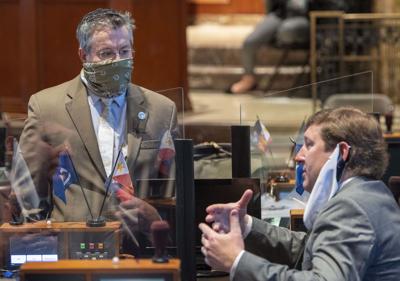
Rep. Tanner Magee, who as speaker pro temp is the second ranking Republican in the state House, said Edwards’ decision not to let many businesses reopen more quickly will have consequences on the GOP-led Legislature’s willingness to work with him in a bipartisan way when lawmakers reconvene after a nearly two-month recess.

“There were windows of bipartisanship, and I think they probably closed yesterday,” Magee said in an interview. “We’re moving toward a very anti-bipartisan mood.”

The governor’s decision to extend the shutdown longer than many legislators wanted “was really hurtful,” Magee said. “Not intentionally, but in having new members come in that had never been through the process before, and they’re very much itching to do something to lead with this crisis. They feel helpless back in their districts because they can’t do anything, and that has caused a situation where people are kind of spiraling out to the wings.”

Edwards and Republican leaders have worked together reasonably well so far through the COVID-19 pandemic, which has sickened more than 27,000 state residents and killed more than 1,750.

Republican U.S. Sen. Bill Cassidy, who is running for reelection, accompanied Edwards at his briefing Friday and agreed the state should only begin to reopen once data about the spread of the virus meets guidelines created by the Trump Administration.

But business groups and some Republican state lawmakers had been urging Edwards to let areas that have not had significant numbers of cases open next weekend, and Magee’s comments signal rising tensions over the timetable.

The tensions come as legislators and the governor need to work together to pass a new budget even as the state’s finances are being decimated by the cost of fighting the virus and the collapse in tax revenue from major industries like gambling, oil and gas and tourism.

Read more at Houma Today.

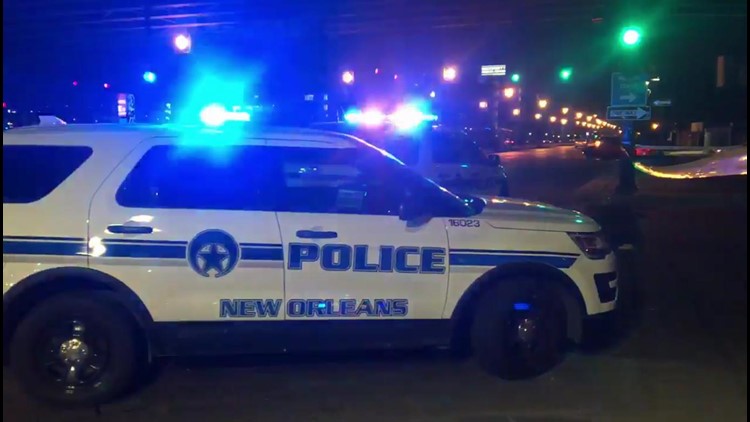
Crime is down in Louisiana for areas heeding stay at home order

Photo Credit: 4WWL.com

Published: April 28, 2020

By: Kathleen Peppo, LSU Manship School News Service

BATON ROUGE, La. — Along with the expected tolls that Gov. John Bel Edwards’s stay-at-home order has taken on citizens across Louisiana, the new normal has had a positive side effect: Crime rates have fallen substantially in cities and towns that are following it.

With the options to roam the streets and hang out in groups ruled out, towns whose citizens are taking the order seriously have seen significantly lower rates of crime and relatively few arrests. On the other hand, crime rates in areas that are continuing life without as much focus on the stay-at-home order are virtually the same as before it was put in place, police say.

A spot check suggests that crime has dropped in the biggest cities—New Orleans, Baton Rouge, Shreveport and Lafayette–and in many smaller spots around the state. Except for a shooting that wounded two juveniles last week, Eunice has seen less crime along with less traffic and less activity all around. Randy Fontenot, Eunice’s chief of police, said the town has been “extremely quiet.”

Fontenot said that the Eunice Police Department made only several arrests during each of the last two weekends, an unusually low number.

“We’re making some, but our daily logs are usually about two or three pages long, and, lately, some have been only half a page,” he said.

With so many public places closed or operating with very little human contact, crime is hardly an option in some areas. People cannot sit inside restaurants, peruse stores freely or roam the streets. There is little to no group activity, and crime is becoming less and less convenient.

Sgt. Wayne Griffin said that the Lafayette Police Department has “seen a real decrease in crime with the stay-at-home order in effect. We’ve seen less stores open, less people on the roads, less people at work, so we’ve had less incidents for sure.”

“Our citizens have been really great about adhering to the orders,” he said. “We’ve been fortunate that people are kind of just staying at home, doing their things, doing some honey dos.”

Read more at 4WWL.com.