GOP legislators renew attacks on Medicaid management as data emerges on misspending

Screen Shot 2019-05-17 at 5.15.57 PM
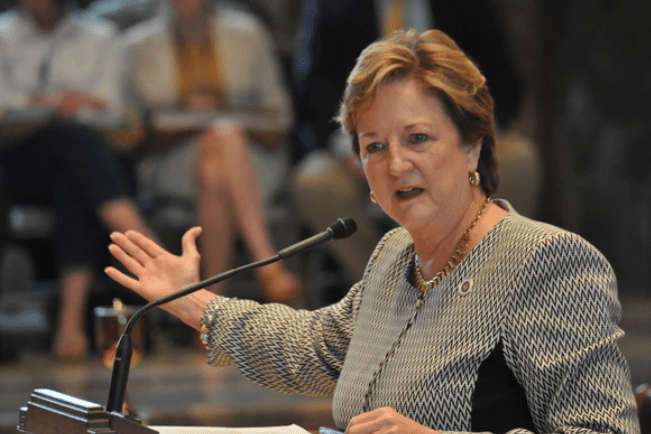
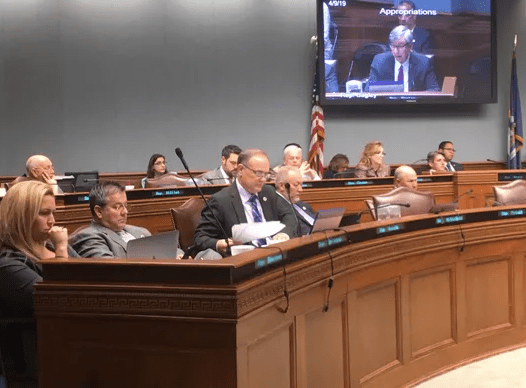
Rep. Tony Bacala, R-Prairieville, questions the Louisiana Dept. of Health officials during Tuesday’s House Appropriations Committee meeting. (Photo credit: Elisabeth Fondren/LSU Manship School News Service)

Published: Apr. 9, 2019

By: Sheridan Wall, LSU Manship School News Service

BATON ROUGE — The Louisiana Department of Health acknowledged Tuesday that 1,672 people had received Medicaid coverage even though they earned at least $100,000 in 2017. Department officials said nearly all of them had since been stripped from the rolls.

An additional 8,474 people were enrolled in Medicaid even though the Louisiana Department of Revenue later found that they had reported incomes of $50,000 to $100,000 on their 2017 tax returns.

Jen Steele, the state Medicaid director, said that 3,550 of those people are no longer enrolled, and 540 have supplied wage data supporting their current eligibility. She said the other 4,384 cases remain under review.

The data about these cases came to light at a House Appropriations Committee hearing as Republican legislators renewed their attacks on how the administration of Gov. John Bel Edwards has managed the program.

Edwards, a Democrat who is running for re-election this year, has cited his support for the basic Medicaid program and his expansion of it to include nearly 500,000 residents making more than poverty-level wages as among his most significant achievements.

Republicans have questioned the cost of the expansion, and state auditors have said the program had been managed too loosely. The Health Department has since beefed up computer systems to check eligibility and recently kicked 30,000 people off the rolls.

Read more in the Shreveport Times.

Edwards presents hopeful State of the State address

Screen Shot 2019-05-17 at 5.10.37 PM
Gov. John Bel Edwards kicked off the 2019 session with a speech to legislators. (Photo credit: Trey Couvillion, LSU Manship School News Service)

Published: Apr. 8, 2019

By: Hunter Lovell and James A. Smith, LSU Manship School News Service

“Our teachers deserve more,” Edwards said, urging lawmakers to “step up” for teachers across the state.

Louisiana Governor John Bel Edwards presented a hopeful State of the State address today at the Capitol to open the 2019 legislative session.

Edwards’ tone stood in sharp contrast to the last few sessions in which lawmakers fought extensively over how to solve state budget problems.

Edwards, a Democrat who is campaigning for re-election, pointed to how the state’s $2 billion deficit has turned into a surplus and said his top priority this year is pay raises for teachers.

He is seeking $1,000 pay raises for public school teachers and $500 raises for school support personnel.

“Our teachers deserve more,” Edwards said, urging lawmakers to “step up” for teachers across the state.

Read more in the Donaldsonville CHIEF.

Republican women in office say Louisiana’s GOP could do more to attract, support candidates

Screen Shot 2019-05-17 at 4.59.34 PM
State Sen. Sharon Hewitt addresses fellow lawmakers in the Louisiana Legislature. (Photo credit: Sarah Gamard, LSU Manship School News Service)

Published: Mar. 15, 2019

By: Abbie Shull, LSU Manship School News Service

Even though Republicans dominate Louisiana politics, only one GOP woman, Suzanne Terrell, has ever held statewide elected office. Her term as elections commissioner ended in 2004.

Terrell and three Republican women serving in the Legislature say their party could be doing more to recruit women to run for office.

“You don’t know if someone is good because they aren’t in office yet,” Terrell said. “I’m not saying to vote for a candidate just because they’re a woman, but the Republicans don’t know all the capable people out there because the party hasn’t tried.”

While female Democrats saw record-breaking success nationally in 2018, Republican women have had much more limited success in running for office. In Louisiana, some say they have struggled to find a place in the state’s traditional “boys’ club” political structure.

Sen. Sharon Hewitt, R-Slidell, an engineer and manager at Shell Oil for nearly 35 years, had chaired a parish recreation board when she started her first campaign for the state Senate in 2015. She said she was openly discouraged from seeking office.

Hewitt said the campaign manager of her Republican opponent, Pete Schneider, called her and said that “the powers that be met in Slidell and decided that it was my opponent’s seat.”

Read more in Nola.com.

The Most Expensive Ever?

Published: Jan. 31, 2019

By: Sheridan Wall and Lauren Heffker, LSU Manship School News Service

A growing number of Louisiana politicos, from pundits to donors, believe that the 2019 race for governor will be one of the most expensive ever waged on Louisiana soil.

But how much will all that money matter?

It matters a lot, said consultant Roy Fletcher. It’s not just the total dollar amount that will be important, but how the cash ebbs and flows in the campaigns, he added.

Analysts say money is most critical for increasing name recognition, and Democratic Gov. John Bel Edwards has an advantage there. For Congressman Ralph Abraham and Baton Rouge businessman Eddie Rispone, the first priority is establishing their GOP image to voters.

Edwards’ campaign announced it has raised a total of $8.4 million so far, while Rispone pledged to use $5 million of his personal cash and has raised an additional $554,000. Abraham has not yet reported donations or spending for this race.

The fundraising game will be crucial early on as challengers need to simultaneously build name recognition and define their messages to voters before Edwards has the opportunity to do it for them, Fletcher said. “So, the fight isn’t just over name recognition,” he said, “but it’s over definition.”

But the election also could be determined by party affiliation in a red state, as Edwards, the only Democratic governor in the Deep South, takes on challengers who will automatically win support from some GOP voters. And given Louisiana’s off-kilter election schedule as one of only three states with governor’s races this year, most experts expect money to pour into the state from outside groups in both parties.

Printed in LaPolitics.

In light of #MeToo movement, more students seeking support

d076ed40-e121-4c40-937b-49ca94c3b623-04ASSAULT_Photo_Bareis
Susan Bareis, the Lighthouse Program Coordinator, discusses the #MeToo movement. (Photo credit: Caroline Fenton/LSU Manship School News Service)

Published: Dec. 4, 2018

By: Claire Bermudez, Caroline Fenton and Payton Ibos, LSU Manship School News Service

Following the #MeToo movement and the hearings on Supreme Court Justice Brett Kavanaugh, more women are coming forward on Louisiana college campuses with complaints of sexual assault and relationship violence.

LSU’s Lighthouse counseling program received 91 requests for support last year, up from 53 in 2016. During the September showdown between Kavanaugh and a woman who accused him of having assaulted her when they were teenagers, requests by LSU students for counseling increased to two a day.

Students can go to Lighthouse for support following rape, domestic violence, stalking or attempted sexual assaults.

Since assault allegations against Hollywood producer Harvey Weinstein and other powerful men set off the #MeToo movement late last year, the Louisiana Foundation Against Sexual Assault (LaFASA) also has seen a spike in reports.

“When the #MeToo initially came out, a lot of our accredited sexual assault centers throughout Louisiana did see a surge in hotline calls,” Josef Canaria, LaFASA’s campus sexual violence coordinator, said. “Statewide, our rape crisis centers phone lines were off the hook.”

Read more in the News Star.

On LSU campus, 41 pedestrians hit in 5 years as some victims put their lives ‘on pause’

5bfde06cac2f9.image
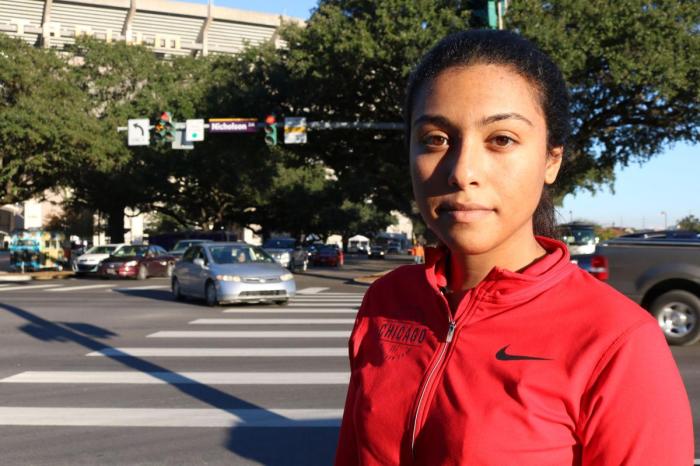
LSU student Mari Dehrab returns to the crosswalk she was waiting to cross when she was hit by a car in August. (Photo credit: Britt Lofaso/LSU Manship School News Service)

Published: Nov. 27, 2018

By: Britt Lofaso and Kennedi Walker, LSU Manship School News Service

Mari Dehrab was waiting to cross a busy street on the LSU campus when everything went black. A car had careened onto the sidewalk and hit her and three others before slamming into a light pole.

Dehrab, 23, suffered a brain tear, causing memory loss so severe that, at one point, she could not remember some of her family members. One of her ankles was broken and the other sprained, confining her to wheelchair for six weeks. She had to drop out of school this semester, ending her hope of graduating in the spring with a degree in mass communication.

“I went through such a big depression, and I still have depression,” she said. “My life has been put on pause because of this accident.”

Dehrab is one of 41 pedestrians hit by cars on LSU’s main campus over the last five years. At least four suffered incapacitating injuries, including a woman placed in a medically induced coma for two weeks after a spinal injury. Ten other pedestrians suffered injuries the LSU Police Department described as “moderate,” without giving details, and 15 more complained of possible injuries. The rest were not injured.

Dehrab, of New Iberia, was hurt Aug. 24, five days into the semester, while she was on her way to class. One car knocked another one onto a sidewalk at Nicholson and Skip Bertman drives. Two other students suffered concussions, with one suffering a broken pelvis and sacrum and some brain bleeding. The other pedestrian had moderate injuries, but police didn’t provide specifics.

Read more in The Advocate.

Mind and body: How do Louisiana colleges help athletes maintain their mental health?

51a2f347-1dec-4478-b2c8-ba782f6f4ed1-27ATHLETES_Photo1_Li
Lauren Li, a former collegiate gymnast, talks about her personal journal with mental health. (Photo credit: Dylan Alvarez/LSU Manship News Service)

Published: Nov. 28, 2018

By: Dylan Alvarez, Brennen Normand and Jace Mallory, LSU Manship School News Service

BATON ROUGE– As a former collegiate gymnast, Lauren Li, found comfort at LSU after experiencing emotional distress at Penn State.

“Anxiety, depression, eating disorders: It was tough just talking about it because being used to suppressing those emotions,” said Li, who was on LSU’s highly ranked team over the last three seasons. “I had to, like, learn how to be comfortable talking about it and seeking help for it if I wanted to help myself.”

It is no secret that expectations are high for athletes at universities across the country. These pressures take a toll, emotionally and physically, on athletes in all sports. And there has long been a stigma that discourages many of them from seeking mental and psychological help.

But now schools in Louisiana and elsewhere are doing more to address the problem, thanks in part to guidelines that the National Collegiate Athletic Association created in 2016 to encourage them to address the problem.

Read more in Town Talk.

Life after prison? The first 72 hours are critical

Screen Shot 2019-05-17 at 3.19.14 PM
Tyrone Smith is one of the founders of The First 72+ group. (Photo credit: Laryssa Bonacquisti/LSU Manship News Service)

Published: Oct. 24, 2018

By: Rachel Mipro, LSU Manship News Service

NEW ORLEANS — There is a garden next to the house on Perdido Street, and a red dog house on the porch that used to belong to a street dog named Frank. You can tell it’s a place where people feel comfortable, a community center.

It’s also a place where 50 men have found new lives right after they got out of prison.

The group that runs the house, The First 72+, helps formerly incarcerated people transition back into society, and it has pioneered the kind of work that the state is now funding as part of its criminal justice reforms.

Gov. John Bel Edwards announced last week that Louisiana will reinvest $8.5 million in savings from reducing the prison population to lower recidivism, support victims and improve public safety in Orleans, Caddo, East Baton Rouge, St. Tammany and Jefferson parishes.

The First 72+ has partnered with Goodwill Industries and Catholic Charities, which will use some of the state money to provide legal services and jobs to the men who pass through the group’s house. The Louisiana Parole Project, a nonprofit in Baton Rouge, will receive $112,165 in state funds to help prisoners from the five parishes return home.

Read more in the Shreveport Times.
Passage of fantasy sports betting illustrates shift across state

fbc408ca-6213-4d86-be1c-4853c04b0535-08FANTASY_Photo1_Michael_Henderson
Mike Henderson, the director of LSU’s Public Policy Research Lab, compared Tuesday’s vote on fantasy sports to a similar vote on video poker in the 1990s. (Photo credit: Abbie Shull/LSU Manship School News Service)

Louisianans voted Tuesday to legalize Daily Fantasy Sports contests in 47 out of 64 parishes, suggesting a significant increase in support for gaming since the 1990s.

Back then, only 31 parishes voted to allow video poker. But this week, 18 parishes that had voted against video poker flipped to support fantasy sports, while two flipped the other way.

Statewide, the share of voters who supported fantasy sports is 7 percentage points higher than the share that supported video poker.

Polling expert Michael Henderson said the biggest increases in favorable votes can be found in metro areas across south Louisiana, including Orleans, Jefferson, St. Tammany, East Baton Rouge, Lafayette and Ascension parishes.

The majority of “no” parishes still reside in the northern and central regions of the state.

“Most of the flips from opposed to support are concentrated in the southern part of the state,” Henderson, the director of LSU’s Public Policy Research Lab, said.

Published: Nov. 8, 2018

By: Jacqueline DeRobertis and Dwayne Hinton, LSU Manship News Service

Read more in the Daily Advertiser.

Voters to decide on fantasy sports betting

Screen Shot 2019-05-17 at 2.29.42 PM
Nicholas Bohall, 24, an LSU graduate student, said playing fantasy sports is one of his favorite pastimes. (Photo Credit: Dwayne Hinton/LSU Manship School News Service)

Published: Nov. 1, 2018

By: Jacqueline DeRobertis and Dwayne Hinton, LSU Manship School News Service

Louisiana voters will decide parish-by-parish on Tuesday if they want to let fantasy sports fans compete for cash prizes. The vote, seen by some lawmakers as a way to gauge statewide gaming sentiment, could set the tone for possibly legalizing betting on real sports in Louisiana.

The Legislature voted last spring to hold the fantasy sports referendum even though it has not yet figured out how the state would earn revenue from the contests or how much money they might bring in.

And in a state that remains sharply divided between the economic benefits and social risks of any type of gaming, it is not clear how many parishes will approve it.

“I think a lot of your south Louisiana parishes with a saint in the name tend to vote for gaming,” Greg Albrecht, the chief economist of the Louisiana Legislative Fiscal Office, said. “Catholics have a different attitude about that. The middle or northern part of the state, it’s a little different story.”

Read more in Houma Today.