Mind and body: How do Louisiana colleges help athletes maintain their mental health?

51a2f347-1dec-4478-b2c8-ba782f6f4ed1-27ATHLETES_Photo1_Li
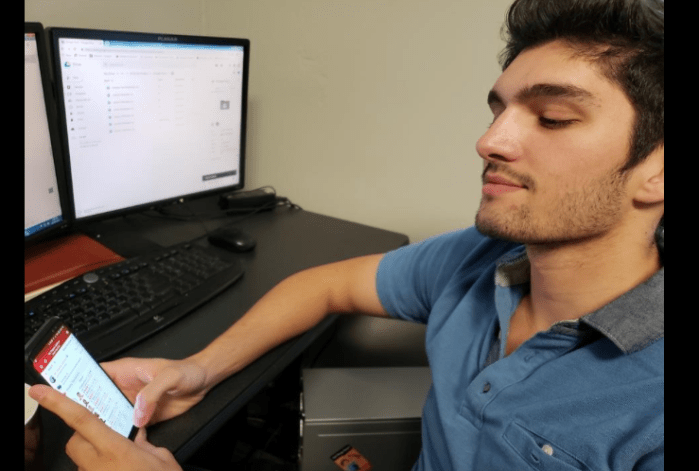
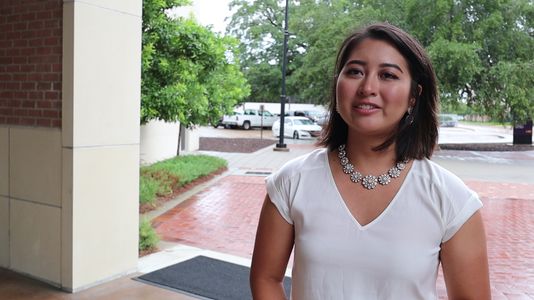
Lauren Li, a former collegiate gymnast, talks about her personal journal with mental health. (Photo credit: Dylan Alvarez/LSU Manship News Service)

Published: Nov. 28, 2018

By: Dylan Alvarez, Brennen Normand and Jace Mallory, LSU Manship School News Service

BATON ROUGE– As a former collegiate gymnast, Lauren Li, found comfort at LSU after experiencing emotional distress at Penn State.

“Anxiety, depression, eating disorders: It was tough just talking about it because being used to suppressing those emotions,” said Li, who was on LSU’s highly ranked team over the last three seasons. “I had to, like, learn how to be comfortable talking about it and seeking help for it if I wanted to help myself.”

It is no secret that expectations are high for athletes at universities across the country. These pressures take a toll, emotionally and physically, on athletes in all sports. And there has long been a stigma that discourages many of them from seeking mental and psychological help.

But now schools in Louisiana and elsewhere are doing more to address the problem, thanks in part to guidelines that the National Collegiate Athletic Association created in 2016 to encourage them to address the problem.

Read more in Town Talk.
Life after prison? The first 72 hours are critical

Screen Shot 2019-05-17 at 3.19.14 PM
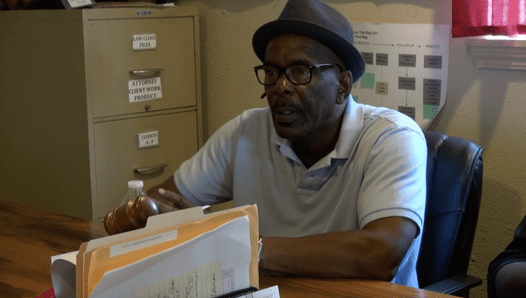
Tyrone Smith is one of the founders of The First 72+ group. (Photo credit: Laryssa Bonacquisti/LSU Manship News Service)

Published: Oct. 24, 2018

By: Rachel Mipro, LSU Manship News Service

NEW ORLEANS — There is a garden next to the house on Perdido Street, and a red dog house on the porch that used to belong to a street dog named Frank. You can tell it’s a place where people feel comfortable, a community center.

It’s also a place where 50 men have found new lives right after they got out of prison.

The group that runs the house, The First 72+, helps formerly incarcerated people transition back into society, and it has pioneered the kind of work that the state is now funding as part of its criminal justice reforms.

Gov. John Bel Edwards announced last week that Louisiana will reinvest $8.5 million in savings from reducing the prison population to lower recidivism, support victims and improve public safety in Orleans, Caddo, East Baton Rouge, St. Tammany and Jefferson parishes.

The First 72+ has partnered with Goodwill Industries and Catholic Charities, which will use some of the state money to provide legal services and jobs to the men who pass through the group’s house. The Louisiana Parole Project, a nonprofit in Baton Rouge, will receive $112,165 in state funds to help prisoners from the five parishes return home.

Read more in the Shreveport Times.

Passage of fantasy sports betting illustrates shift across state

fbc408ca-6213-4d86-be1c-4853c04b0535-08FANTASY_Photo1_Michael_Henderson
Mike Henderson, the director of LSU’s Public Policy Research Lab, compared Tuesday’s vote on fantasy sports to a similar vote on video poker in the 1990s. (Photo credit: Abbie Shull/LSU Manship School News Service)

Louisianans voted Tuesday to legalize Daily Fantasy Sports contests in 47 out of 64 parishes, suggesting a significant increase in support for gaming since the 1990s.

Back then, only 31 parishes voted to allow video poker. But this week, 18 parishes that had voted against video poker flipped to support fantasy sports, while two flipped the other way.

Statewide, the share of voters who supported fantasy sports is 7 percentage points higher than the share that supported video poker.

Polling expert Michael Henderson said the biggest increases in favorable votes can be found in metro areas across south Louisiana, including Orleans, Jefferson, St. Tammany, East Baton Rouge, Lafayette and Ascension parishes.

The majority of “no” parishes still reside in the northern and central regions of the state.

“Most of the flips from opposed to support are concentrated in the southern part of the state,” Henderson, the director of LSU’s Public Policy Research Lab, said.

Published: Nov. 8, 2018

By: Jacqueline DeRobertis and Dwayne Hinton, LSU Manship News Service

Read more in the Daily Advertiser.

Voters to decide on fantasy sports betting

Screen Shot 2019-05-17 at 2.29.42 PM
Nicholas Bohall, 24, an LSU graduate student, said playing fantasy sports is one of his favorite pastimes. (Photo Credit: Dwayne Hinton/LSU Manship School News Service)

Published: Nov. 1, 2018

By: Jacqueline DeRobertis and Dwayne Hinton, LSU Manship School News Service

Louisiana voters will decide parish-by-parish on Tuesday if they want to let fantasy sports fans compete for cash prizes. The vote, seen by some lawmakers as a way to gauge statewide gaming sentiment, could set the tone for possibly legalizing betting on real sports in Louisiana.

The Legislature voted last spring to hold the fantasy sports referendum even though it has not yet figured out how the state would earn revenue from the contests or how much money they might bring in.

And in a state that remains sharply divided between the economic benefits and social risks of any type of gaming, it is not clear how many parishes will approve it.

“I think a lot of your south Louisiana parishes with a saint in the name tend to vote for gaming,” Greg Albrecht, the chief economist of the Louisiana Legislative Fiscal Office, said. “Catholics have a different attitude about that. The middle or northern part of the state, it’s a little different story.”

Read more in Houma Today.

Will Louisiana teachers finally get pay raises?

01d62169-0814-4c5d-8e44-466109e6d0ea-02TEACHERS_photo_Couturier
(Photo Credit: Courtesy of Danielle Couturier)

Published: Nov. 4, 2018

By: Sheridan Wall and Charlotte Bellotte, LSU Manship News Service

Danielle Couturier, an elementary teacher in suburban New Orleans, gets to school at 7 a.m. and often works on lesson plans until 10 p.m. But the 15-hour days are not enough to make ends meet. She also teaches summer school for extra pay.

Couturier, who has a master’s degree and 16 years of experience, makes $46,000 a year. After the first of her three children was born, she had to waitress on the weekends to earn more money.

“We put our blood sweat and tears and our whole hearts into this,” she said. “I don’t feel valued. I never have. But I’m OK with that because that’s not why I do it.”

Teachers like Couturier have long been willing to accept being underpaid. But now many are saying enough of that.

‘Extreme bipartisan support’

Educators in West Virginia, Kentucky, Oklahoma and Arizona reached a breaking point this year with a wave of walkouts and strikes over pay. And now, with teachers in Louisiana voicing concerns as well, Gov. John Bel Edwards’ top legislative priority is raising teacher pay by $1,800 to reach the average of just under $51,000 for Southern states.

Read more in the Daily Advertiser.

Farmers Markets in other areas accept SNAP

lsu-300x225
Eric Morrow setting up his tomato stand at the Red Stick Farmers Market early on a recent Saturday. (Photo Credit: Trey Couvillion/LSU Manship School News Service)

Published: Oct. 30, 2018

By: Trey Couvillion and Sarah Procopio, LSU Manship News Service

For Earlene Watts, walking to a farmers market with her 15-year-old son has become a weekend ritual. The LSU student and mother of four has visited the downtown Red Stick Farmers Market every week for seven years and counting, delighted that farmers there let her use state assistance to buy more nutritional food.

“We’re are able to shop for healthy items, and I am able to teach my kids how they can benefit from being healthy,” she said.

Watts is one of 1,300 people who use state food assistance to buy fresh produce and other products at farmers markets in Baton Rouge, thanks in part to grants that provide spending matches to increase their purchasing power.

But the program is far from universal: Only a few farmers markets in the state accept benefits from the Louisiana Supplemental Nutrition Assistance Program (SNAP) as payment, and some do not provide a dollar-for-dollar matching component like the one where Watts shops.

Farmers markets in Lafayette, Covington, Lake Charles and Hammond do not take the benefits, formerly known as food stamps, while all the vendors at markets in Delcambre, Ruston, Baton Rouge and New Orleans do. Other markets, like in Shreveport and Mandeville, fall somewhere in between, with only some of the vendors accepting the state benefits.

Read more in KATC News.

LSU hosts La. Secretary of State candidate forum

Screen Shot 2019-05-17 at 2.09.49 PM.png
Four of the six Secretary of State candidates who spoke at Monday’s forum were (l-r) former State Sen. A. G. Crowe; State Rep. Rick Edmonds; Renée Fontenot Free, who served as a top aide to two former secretaries of state; and Rep. Julia Stokes. (Photo Credit: Abbie Shull/LSU Manship News Service)

Published: Oct. 30, 2018

By: Abbie Shull and Madeline Reineke, LSU Manship News Service

Six of the nine candidates in the race attended the forum at LSU’s Reilly Center for Media and Public Affairs. It was part of LSU’s Behind the Ballot symposium, a two-day event featuring a variety of panels on voting and the 2018 midterm elections.

Five of the six candidates for Louisiana Secretary of State found common ground in a forum Monday evening as they each tried to shake interim Secretary of State Kyle Ardoin’s perceived confidence in his incumbency.

There was little hostility between panelists since they were not allowed to address each other directly. But, a few managed to sneak in some indirect jabs with just over a week to go until the Nov. 6 election.

Rep. Rick Edmonds, R-Baton Rouge, said he was displeased with Ardoin’s leadership as it relates to local election officials, like the registrars of voters and the clerks of court.

“I’ve met with many of them across the state, and I was surprised to ask them some very simple questions about the administration,” Edmonds said. “For example: ‘When was the last time the Secretary of State was in your office?’ And the answer I received numerous times was ‘never.’”

Read more in the Gonzales Weekly Citizen.

Survey: Dems hold 12-point lead in Congressional battleground districts

B9316883231Z.1_20150406164011_000_G15AEBRVK.1-0
(Source: AP)

Published: Oct. 25, 2018

By: Jacqueline DeRobertis, LSU Manship News Service

BATON ROUGE — A new national survey finds that Democrats hold a 12-point lead over Republicans in 72 battleground districts that will decide control of the U.S. House in the midterm elections.

The survey, conducted by The Cook Political Report and LSU’s Manship School of Mass Communication in collaboration with political consultant James Carville, indicates that Democrats lead Republicans 48-36 among registered voters in those districts.

‘Not like a slam dunk’

The survey also found that 42 percent of voters in the most competitive districts oppose President Trump or his policies, while 23 percent are voting to support the president.

Michael Henderson, the director of the Manship School’s Public Policy Lab, cautioned, however, that Democratic victories in many of the races are “not like a slam dunk.”

Which side turns out more of its supporters will be crucial. Other surveys show that the parties are running “neck to neck” in terms of the likelihood that their supporters will actually vote on Nov. 6, he said.

“The one thing we know about this election to almost a certainty is that the turnout is going to be a record high,” Carville said. “When that happens, some weird things can happen on election day.”

Read more in the Shreveport Times.

Big-name figures help students understand: To stay or not to stay in-state?

carville
Political Strategist and LSU professor James Carville discussed the issues surrounding millennials’ decision to stay or leave Louisiana with LSU student government president Stewart Lockett, and Re-Envisioning Louisiana symposium organizer Sarah Procopio. (Photo: Stephanie Malin)

Abbie Shull and Jacqueline DeRobertis

Young people in Louisiana are asking themselves a key question: Should I stay or should I go?

Students, political figures and entrepreneurs from across the state gathered Tuesday at LSU’s Reilly Center for Media and Public Affairs for a symposium on re-envisioning Louisiana as a place that could keep more of its young talent from moving to states ranked more highly for economic and educational opportunities.

“I think if I had gone to those places that are fifth on the lists instead of 45th, I think my road ahead would be easier, but I also think it would be less impactful,” LSU sophomore Sarah Procopio said.

Procopio, a Baton Rouge native, explained that she would rather stay in her home state and fight for change.

Read more in The Advocate.

Political scientist: America isn’t as politically divided as you think

dr000000001
Dr. Michael Wagner, a political scientist from the University of Wisconsin, spoke at LSU Tuesday about the partisan divide.(Photo: Stephanie Malin)

Jacqueline DeRobertis

Political scientist Michael Wagner believes that America is not as politically divided as it seems.

“Political division is normal,” he said Tuesday in a talk at LSU. “It’s not problematic that we disagree, but if we stop listening to each other, we are in real trouble.”

He explained that to most people, polarization means red versus blue or right versus left – but that the data tells a different story. While elected officials tend to be hyperpolarized, the public’s beliefs span a range of political ideologies, from populist to libertarian, with some moderates drawn from each camp.

Wagner, a professor at the University of Wisconsin who is working on a book about the partisan divide, gave a presentation at the Reilly Center for Media & Public Affairs at LSU’s Manship School of Mass Communication.

Read the story in KALB.