Louisiana postpones presidential primary until July 11 due to COVID-19 concerns

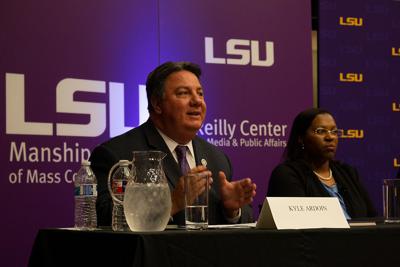
Kyle Ardoin

BATON ROUGE–House and Senate committees on Wednesday approved an emergency plan that delays the state’s presidential primary until July 11 and limits efforts to expand the use of absentee ballots because of the coronavirus.

The plan, prepared by Secretary of State Kyle Ardoin, reduces the list of reasons that he had proposed last week for voters to qualifyto vote by mail.

Ardoin shortened the list after the Republicans on the Senate and Governmental Affairs Committee rejected his earlier proposal in a party-line vote.

Under the new plan, voters can still seek absentee ballots if they are at higher risk from the virus because of serious medical conditions or are subject to a medical quarantine order. People with symptoms of COVID-19 or caring for someone subject to a quarantine order also may seek absentee ballots.

The rules also would apply to state and local elections on August 15. The plan must still be approved by the full House and Senate and by Gov. John Bel Edwards.

No changes have been considered for the presidential and congressional elections in November.

Ardoin’s original proposal also would have extended the early-voting period from seven to 13 days to allow for less concentrated groups of people gathering to cast their votes. It would have lowered an age threshold for requesting absentee ballots to 60 and older from 65 and older and allowed anyone who was worried about health risks to vote absentee.

Ardoin, a Republican, dropped those provisions after legislators complained last week that anyone could claim they had health concerns and qualify for an absentee ballot, potentially increasing the risk of some fraud.

“It seems like we are opening ourselves to more risk and fraud than ever,” Sen. Barry Milligan, R-Shreveport, said then.

His comments echoed concerns expressed by President Trump, who claimed recently that “mail ballots are a very dangerous thing for this country, because they’re cheaters.”

Read more at the Lafourche Gazette.
 

Gov. Edwards announces Louisiana now has 13 presumptive coronavirus cases

JBE coronavirus

Published: March 11, 2020

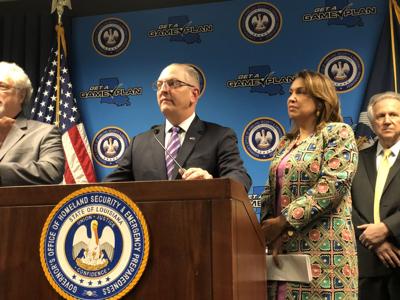
BATON ROUGE—Gov. John Bel Edwards said the number of presumed cases of COVID-19 in Louisiana increased to 13 on Wednesday from six a day earlier, with people testing positive in Orleans, Jefferson, St. Tammany, Iberia, Lafourche and Caddo parishes.

Edwards declared a statewide public health emergency, adding that “it is worrisome” to see the coronavirus spread across the state.

Three of the positive tests were linked to the Lambeth House, a retirement home in New Orleans, the governor said.

All told, 10 of the cases are in the metro New Orleans area, state officials said. One person is either is from or hospitalized in each of Iberia, Lafourche and Caddo parishes.

The cases are considered presumptive until they are confirmed by the Centers for Disease Control.

Limited information about the 13 people who tested positive has been released due to privacy laws. But New Orleans officials have said that the first case there came from the virus spreading within the community rather than from foreign travel by the person who was infected.

Separately, Loyola University canceled classes scheduled for this Thursday and Friday and said it would hold classes only online starting next Monday. Tulane University said it is canceling all classes till March 23, when will resume with all classes online.

LSU officials said earlier Wednesday that they are watching developments closely and weighing the possibility of closing the school after spring break, which occurs during the week of March 22.

Edwards advised higher-education leaders to consider going online, but he said he trusted them to make the decisions.

Edwards said the state would prohibit its employees from traveling risky areas overseas.

The earliest a vaccine could be made for the coronavirus would be in about 12 to 18 months, according to the Health Department.

Read more at The Reveille.

Gov. Edwards announces two more presumptive positive cases in New Orleans area

Screen Shot 2019-05-17 at 5.10.37 PM

Published: March 10, 2020

By: Hailey Auglair, LSU Manship School News Service

BATON ROUGE–Louisiana has two more presumptive positive cases of the coronavirus in the New Orleans area, bringing the total to three, Gov. John Bel Edwards announced Tuesday.

The cases are presumptive until they are confirmed by the Centers for Disease Control.

The patients are at University Medical Center, Touro and the Veterans Affairs Medical Center in New Orleans, according to The Advocate.

“It is important that the public take measures to protect their health and reduce the spread of illness, including avoiding going out in public when you are sick, washing your hands, social distancing and disinfecting commonly used surfaces,” Edwards said.

The governor will hold a meeting of the Unified Command Group Wednesday afternoon to discuss the situation. He will hold a news conference after that.

Edwards said he expects to see more presumptive positives in the coming days and weeks as the state expands testing for COVID-19.

“I am asking all Louisianans to remain vigilant as we work to contain the spread of this and other illnesses,” he said

As of Tuesday afternoon, at least 955 people in 36 states and Washington, D.C. have tested positive for coronavirus, according to a New York Times database, and at least 29 patients with the virus have died.

Read more at The Reveille.

Gov. Edwards opens legislative session, announces coronavirus found in La.

Published: March 11, 2020

By: Maria Marsh, Catherine Hunt and Paige Daniel, LSU Manship School News Service

BATON ROUGE–Gov. John Bel Edwards on Monday disclosed the first case of coronavirus in Louisiana, a Jefferson Parish resident who was hospitalized in Orleans Parish.

While the case of covid-19 has yet to be confirmed by the Centers for Disease Control, the state is treating it as a “presumptive positive,” he said.
“Now together we all—as a government, as health care systems and providers, as schools, businesses and as neighbors—must take action and be vigilant to prevent the spread of this virus in our great state,” Edwards said.
Edwards made the announcement as he addressed the Louisiana Legislature to begin this spring’s session.

Edwards told returning legislators, as well as 45 freshman representatives and 20 freshman senators, that the state can move forward only through bipartisanship, especially in areas where it does worse than other states, including education and the cost of auto-insurance.

Edwards, the only Democratic governor in the Deep South, won re-election last fall. Republicans gained more seats in the Legislature and now have a supermajority, or two-thirds of the seats, in the Senate. They are now only two seats away from holding a supermajority in the House.

One of the biggest issues that the Legislature will face this session is how to lower insurance premiums.

Louisiana residents pay the second highest auto-insurance rates in the country, behind only Michigan. Little has been done in the past four years on this front, and lowering rates ranks high on the agendas of both Edwards and Republican lawmakers.

“Auto insurance costs too much in Louisiana, period,” Edwards said.

Edwards would like to shift from auto-insurance rates being based on an individual’s sex, profession and other personal aspects. He proposes having flat basic rates that fluctuates with an individual’s driving record.

He said, for instance, that some insurers now charge higher rates to widows, people with poor credit scores and even deployed servicemen.

“We have 130 guardsmen currently mobilized, and we are about to have nearly 2,000 more deployed at the end of the year,” Edwards said. “And we should do everything in our power to make sure they are not penalized when they return.”

Republicans lawmakers have said they will continue to try to reduce premiums by changing the state’s litigious climate. Edwards said he was willing to seek compromises with the Republicans in that area, known as tort reform.

Read more at the Bossier-Press Tribune.

Education takes priority in governor’s proposed $32 billion state budget

Commissioner of Administration Jay Dardenne presented Gov. John Bel Edwards’ proposed state budget Friday at a hearing in the Capitol.(Photo Credit: Elizabeth Garner)

Published: February 8, 2020

By: Hailey Auglair and Evan Saacks, LSU Manship School News Service

BATON ROUGE—Gov. John Bel Edwards proposed a $32 billion state budget Friday focusing on education as a high priority, with increases in funding for early childhood, K-12 and higher education, including TOPS scholarships.

The budget, for the 2020-2021 fiscal year beginning July 1, was presented by Jay Dardenne, the commissioner of administration, to the Joint Legislative Committee on the Budget. It marks the beginning of negotiations that will play out in the legislative session starting in March.

The governor proposed increasing spending by nearly $285 million overall. But lawmakers will not be asked to raise any taxes this year, Dardenne said.

“This increase to higher education is a very significant investment,” Dardenne said.

It would increase early childhood funding by more than $25 million and higher education by nearly $35 million. It also would boost the money for TOPS scholarships by $5.56 million as more students have become eligible.

However, these increases are dependent on about $100 million in funding that is not currently available because Edwards, a Democrat, and the new Republican leaders, House Speaker Clay Schexnayder and Senate President Page Cortez, have not been able to reach agreement on an official estimate of what the state’s revenue. The Republicans proposed using a lower forecast than Edwards.

As a result, Dardenne said the administration viewed its proposal as a starting point for negotiations.

Despite Edwards’ promises for teacher pay raises during his re-election campaign, there is no funding explicitly allocated for them. Dardenne said the K-12 could use some of the increased funding for pay raises, but it would be up to local districts to decide what to do.

The proposed funding for higher education is still not as high it was nearly a decade ago, but the total has been steadily hiking back up since 2016 when the state faced an overall $2 billion budget shortfall.

Edwards’ proposal includes a $10.9 million increase next year in statewide adjustments to fund mandated costs, like retirement benefits for university staff.

Sen. Bret Allain, R-Franklin, said this increase would greatly benefit smaller schools that have struggled to pay these costs.

“This is the No. 1 budget problem at Nicholls State University, McNeese State and a lot of these smaller universities,” Allain said. “We’re actually paying more in mandatory costs back to the state than we’re getting. The argument’s been made we’d be better off separated from the state.”

Read more at the Shreveport Times.

River flood issue discussed at Iowa caucus

Many homes in Hamburg, Iowa remain unsafe to occupy, with the spring's major flooding posing risks of abrasions, food contaminations and mold exposure. (Photo credit: Olivia Sun/ Des Moines Register)
Published: February 5, 2020

By: Rachel Mipro, LSU Manship School News Service

DES MOINES, Iowa—The Quad City River Bandits had an impossible time drawing a crowd opening night last spring. Its minor league ballpark was surrounded by water two-stories high after the Mississippi River overran its banks and flooded downtown Davenport. With flooded streets and walkways, the team was forced to play elsewhere in Iowa and gave up nearly two dozen home games.

But the team was not alone. Many areas across Iowa, which is bordered by the Missouri River in the West and the Mississippi in the East, had been rendered unusable by rising waters.

Days before the Iowa caucuses on Feb. 3, infrastructure and flooding are a top concern for Iowans, especially after 50 Iowa levees were breached in 2019, and the outlook for this spring is not much better.

In Davenport, the third-largest city in Iowa, nothing prevents the Mississippi River from sweeping in. There are no permanent flood walls or levees guarding the water and no firm plans in place, even after the April flooding, to build some. Water infrastructure is lacking, leaving citizens scrambling for support against worsening environmental conditions.

Standing outside in line for presidential candidate and businessman Andrew Yang’s event in Perry, landscape architect-in-training Natalie Jensen talked about her experience with flooding. Jensen, who’s worked at the firm Confluence since her graduation from Iowa State University, said that they are designing around flood risk like using permeable pavers and porous materials to reduce standing water.

“Des Moines especially has been more aware of it,′ Jensen said. “Omaha, Nebraska, has been very affected by it. It totally tore out a part of the interstate highway,” she said.

Jensen said her uncles and cousins who are farmers, lost significant portions of their crops, and are being careful where they will plant now to avoid a chance of flooding.

According to the Iowa Flood Center at the University of Iowa, there are several initiatives aimed at reducing flooding. One of these is the Iowa Watershed Approach, which focuses on nine district watersheds in Iowa. Each site, from the Upper Iowa River to North Racoon River, will develop their own hydrologic assessment, watershed plan and flood resilience programs.

The ultimate goal is to use the information to create a wider plan for Iowa, its neighboring states and other communities affected by flooding.

At a national level, politicians from Sen. Cory Booker (D-NJ) to Sen. Bernie Sanders the independent of Vermont, have spoken on these issues in Iowa, reiterating their support for the Green New Deal and rebuilding infrastructure in an attempt to reach voters.

Read more at Plaquemine Post South.

Joe Biden’s Iowa campaign ‘consistent’ but uneven, supporters say

(Photo Credit: WWLTV)

Published: February 3, 2020

ByLara Nicholson, LSU Manship School News Service

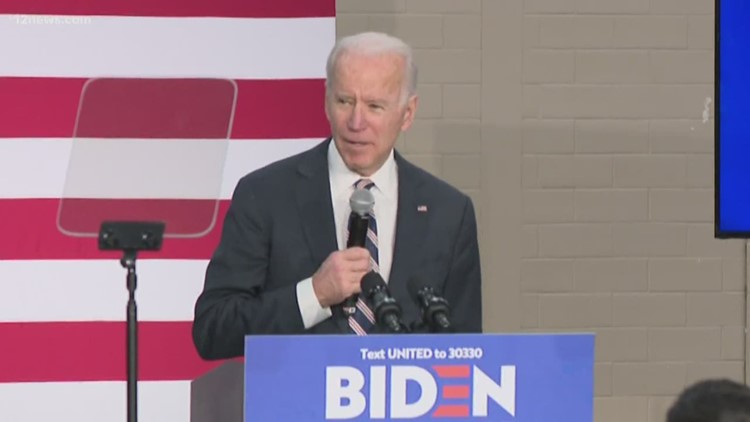
DES MOINES, Iowa—Just as on the national debate stage, Joe Biden’s campaign appearances in Iowa can be uneven. He can exude experience and expertise. He can appeal to America’s best instincts. Or he can also get lost in his long-winded answers that can wander on and extinguish whatever excitement he and his crowds can muster.

With caucus night on Monday, Feb. 3, the former vice president has had Iowa much to himself since the Senate impeachment trial tied up Sens. Amy Klobuchar of Minnesota, Bernie Sanders of Vermont and Elizabeth Warren of Massachusetts. But how well Biden has capitalized on the moment is as unpredictable as his rally performances.

Just how unpredictable can a veteran campaigner be? In early January, as Biden was gearing up for a month of Iowa campaigning, Biden showed his two sides. One was the knowledgeable former vice president and senator; the other was a tired, aging politician who didn’t bring much passion to the stage and generated even less among a sleepy crowd.

The long-winded Biden showed up several weeks ago at what became a dismal performance in a Des Moines elementary school gym. At a rally scheduled for 7:30 p.m. — late by Iowa standards — he showed up nearly two hours late to a crowd that was literally standing around, mostly without chairs, boxed in by hard, bright white gym walls, few windows and little room to breathe.

Without apology, Biden plowed ahead with a 20-minute speech, covering everything from the values his grandfather taught him to a superficial, three-soundbite plan to fix the country: restore the soul of the nation, rebuild the middle class and reunite the country.

“Putting America first means putting America last,” Biden said on more than once.

Each topic faded into the next, with no punchline for voters to take away.

Then came the questions, of which he managed to take only three before the evening ran past 10 p.m..

The first question was straightforward regarding the vaping epidemic in the country, and Biden took only two minutes to answer.

The next was slightly more involved regarding the Gulf War and Osama Bin Laden. For that he placed all fault on former President George W. Bush in a quick six minutes to answer.

“We will follow Bin Laden to the gates of hell if we have to,” he quoted Obama’s staff as saying.

The final question was from a 14-year-old boy who wanted to know how Biden would create more equality in education.

That answer lasted for 11 minutes, in which Biden vowed to fire Betsy DeVos, Trump’s education secretary, address mental health care in schools and provide free degrees from community colleges before ending with what Biden described as the rise of a fourth industrial revolution. Each topic was freighted with statistics, quickly causing some attendees to lose interest and even doze off.

“Early education is a kite string that lifts our national ambition,” he said along the way.

Read more at WWLTV.com.

What I saw at a Trump Rally: an LSU journalism prof’s impressions

Election 2020 Trump (Photo Credit: AP Photo/Charlie Neibergall)

Published: February 3, 2020

By: Will Mari

DES MOINES, Iowa — “Do you want some of my beef jerky?” asked the man, a producer for Vice Media.

The risers were shaking in the indoor stadium at Drake University, as we waited for the arrival of President Trump at the Knapp Center on a cold Thursday night ahead of the Monday caucuses in Iowa. The salty smell of popcorn and hotdogs from the concession stands was wafting into one of two designated press areas, and I had said aloud that I was hungry.

I told him no thank you, but appreciated the offer—I had heard from friends and other colleagues that the experience of attending a Trump rally could be challenging for reporters, but I went back to my note taking feeling more assured.

A few minutes later, an alumna from our program came over to say hello—she had noticed my purple LSU hoodie poking out from under my blue sports coat. We talked for a few moments.

I explained I was there to work on a research project on how journalists pick their sources. She gave me her card and some tips, and wished me luck. I must have looked a little nervous. I had covered political rallies before, but this felt different.

Below, Jeff Kaufmann, the state’s GOP party chairman, was firing up the crowd. They roared their approval.

Kauffmann, who has a Ph.D. from the University of Iowa, referred to himself as “Dr. Deplorable” — he’s taught history and government at Muscatine Community College. My ears perked up a bit at that—I had gone to a community college, too, and could identify with being told I wasn’t capable, or smart.

A source once told me to my face that my stutter meant that I’d never work in journalism.

Like Kauffman, I come from a military family — and I have served in the military (though I should note here that my opinions are my own). Like Kauffman, I am an academic, working an assistant professor of media law and history at the Manship School at LSU.

After he left the stage, the strains of “Norma Jean,” “The House of the Rising Sun” and “YMCA” blasted the arena, as my fellow media types prepped their cameras and typed up stories, taken from interviews in the milling crowd below, more than 7,000 strong.

When Vice President Pence arrived, I made my way down to the floor, and found an awkward spot among a sea of tripods and microphones in the other media “pen.”

Even as senators back in Washington, D.C., were debating the admission of witnesses and still in the midst of questions for his impeachment trial, the President came on. The crowd’s rumble grew to a crescendo. That, combined with the supercharged soft rock, shook my worse-for-the-wear portable keyboard, its “5” key long since broken.

Read more at WWLTV.com.

Is fertilizer runoff in central US causing Gulf of Mexico ‘dead zone’?


Published: January 17, 2020

By: Sarah Procopio and Rachel Mipro, LSU Manship School News Service

DES MOINES, Iowa—Tom Rendon came here to a Sen. Bernie Sanders presidential campaign event and handed out stickers that said, “Water is Life.”

Rendon has been a member of Iowa Citizens for Community Improvement for over 20 years. The group works on immigration, trade and environmental issues including pollution from large farms that the group believes contaminates the Mississippi River to the Gulf of Mexico.

For Rendon, the hypoxic waters, or “dead zone” problem at the mouth of the Mississippi, is caused mostly by corporate farming and runoff of nitrate fertilizer in Iowa and other states. His hope is that Sanders, the Vermont independent, will have the vision as president to address complex agricultural and environmental problems.

Six months ago, the dead zone was about the size of Massachusetts. Its waters have little or no oxygen and it is killing fish and other organisms, endangering the livelihoods of those who depend on the Gulf’s seafood.

Adam Mason, state policy director for the Iowa citizens group, said it worked with a lot of communities to stop construction of “factory farms” and combat the pollution he says they produce. According to Mason, Iowa is No. 1 in U.S. hog production with more than 26 million hogs generating over 22 billion gallons of liquid manure that’s dumped untreated onto Iowa farm fields and can runoff into waterways.

“This liquid manure, in addition to having lots of harmful bacteria, has nitrates and phosphorus, so we see that as a significant contribution to both the water crisis we have here in the state of Iowa as well as the dead zone,” Mason said.

The Iowa Pork Producers Association believes there is no science to support the claim that pork farming has any relation to the dead zone in the Gulf, according to Dal Grooms, the communications director.

But in 2018, a group of university studies collaborating with the National Oceanic and Atmospheric Administration attributed the dead zone to nutrient pollution. One study, by the University of Michigan, concluded that “the Gulf’s hypoxic zone is caused by excess nutrient pollution, primarily from human activities in the watershed, such as urbanization and agriculture,” it said in a statement.

University of Iowa researchers concluded that Iowa was responsible for a large portion of nitrate pollution using data collected from 1999-2016.

The study said Iowa contributed “between 11% and 52% of the long-term nitrate load to the Mississippi-Atchafalaya Basin, 20% to 63% to the Upper Mississippi River Basin, and 20% to 89% to the Missouri River Basin, with averages of 29%, 45% and 55%, respectively.”

Read more at The Daily Advertiser.

Watch: Presidential candidates say ‘Geaux Tigers’ while on campaign trail in Iowa

(Video Credit: Alyssa Panepinto)

Published: January 11, 2020

By: Lara Nicholson and Abigail Hendren, LSU Manship School News Service

DES MOINES, Iowa—Most college students spend their winter vacations enjoying a reprieve from classes and work.

But about 30 Louisiana State students and faculty invaded Iowa, crisscrossing 1,500 miles to see Democratic presidential candidates campaign before the February 3 caucus.

Still, the national college football playoff, slated for Monday night in New Orleans, was never out of mind. LSU students weren’t shy about asking several candidates for a “Geaux Tigers!” cheer.

Even Joe Biden, whose daughter went to nearby Tulane University, did what it takes to win over LSU Tiger fans.

“I’m going to get in trouble,” the former vice president grumbled.

“No, you’ve got to do it,” an LSU student insisted.

“Alright. Geaux Tigers!” he said, somewhere between a mutter and a shout.

Read more at The Advocate.